IELTS GT Letter 2017 with Model Answer

The IELTS General Training letter below was reported in the IELTS test this year. It is a typical formal letter that can appear in IELTS GT writing task 1. The task was reproduced as accurately as possible by IELTS students.
 
IELTS General Training writing task 1 is a letter which you must write in 20 mins with over 150 words. You can find useful tips on this page: Essential Tips for IELTS GT Letter Writing. For more useful links, see below.
 

IELTS General Training Letter 

 
You recently read an article in newspaper about someone you know personally. You found some information is wrong. Write a letter to editor to inform him about it. Use following points:
  • What is the article about?
  • What is the error?
  • What you expect an editor to do?

IELTS GT Letter Model Answer

  • Spot the errors in the letter below to find out why this letter didn’t get band 9.
 
Dear Sir,
 
I am writing to you regarding the recent article you published about Sir David Markham last week, April 2nd , in The Times newspaper.
 
The article gives a breif biography of Sir David’s life and then continues to focus on his work and the impact it has had. The biography starts with his birth in Edinburgh and his later move in 1962 to Durham University. From there, it focuses on his work with the UN.
 
I would like to point out an error in your article. Documentation shows that Sir David did not go directly from Edinburgh to the University of Durham, in 1961. In fact he took a gap year in Europe working with a volunteer program and then went to University in 1962.  I know this as I worked with him in Europe and become friends with him. His year abroad, which is absent from your article, created the foundation of his philosophy of life which guided him through his work in later years.
 
I hope you will publish this correction in the newspaper. Sir David’s work is still of immense importance and people should know the importance of that gap year in his life.
 
Looking forward to a positive reply.
 
Yours sincerely,
 
Jane Frankland
 
Comments: Estimated band score 8. The task has been completed but there are some issues with the letter. Below are a few points highlighted:
1) Second Paragraph: breif = brief
2) Third Paragraph: become friends = became friends
3) Yours sincerely = Yours faithfully

IELTS General Training Useful Links:

 Click links below to open …
 
All GT Writing Task 1 Tips, Model Letters etc: IELTS Writing Task 1 (please note you need to scroll to the bottom of the page to find the GT section)
 

……………….

FREE SUBSCRIBE to Receive New Lessons & Tips by Email

Writing Skills: Spotting Mistakes 3

Mistakes in grammar or vocabulary can affect your score in IELTS writing. Learning to proof read your essay will help reduce the errors and improve your score. There are links to more practice lessons below.

Spot the Mistakes

The following sentences contain mistakes (one or more). Can you spot them?

  1. Research into space explorations can lead to new cutting edge technology.
  2. Handwriting skills is still essential even in todays modern world.
  3. The best way to tackle problem of littering is to have more bins available.
  4. Working long hours is a problem which can lead to increase levels of stress.
  5. Government should spend more money on the arts for order to protect cultural identity.

If you are aiming for band score 7, you should be able to spot 6 out of 7 mistakes.

Answers

Click below to reveal the answers:

Answers

  1. space exploration = uncountable
    1. Research into space exploration can lead to new cutting edge technology.
  2. noun verb agreement = are  /  today = today’s
    1. Handwriting skills are still essential even in today’s modern world.
  3. problem = it needs an article
    1. The best way to tackle the problem of littering is to have more bins available.
  4. working long hours = this is a noun phrase starting with a gerund = singular verb is correct  /  increase = increased
    1. Working long hours is a problem which can lead to increased levels of stress.
    2. Working long hours is a problem which can lead to an increase in the levels of stress.
  5. government = article needed  /  for order to = in order to
    1. The government should spend more money on the arts in order to protect cultural identity.


More IELTS Essay Writing Lessons 

If you would like more lessons, tips and see some model essays, please see this page: IELTS Writing Task 2 Main Page

Main IELTS Pages

Develop your IELTS skills with tips, lessons, free videos and more.

Get my free lessons by email

Subscribe for free to get my new IELTS lessons sent to your email inbox.


How I Scored 9 in IELTS Speaking

IELTS Speaking Band 9 Tips from a sucessful IELTS candidate. Nouman shares his experience and tips of how he got 9 in IELTS speaking. You can find useful links for IELTS at the end of this article.

All students taking GT or Academic IELTS will take the same speaking test. There is only one speaking test for all students. These tips are useful for all candidates.

Band Score 9 in IELTS Speaking

How I scored Band 9 in IELTS Speaking

I believe I managed to score a 9 with continuous practice and being myself in the test. The best thing is not to feel shy when you speak about any particular topic. Do not think that your thoughts might be too little or simple to express.  Some of us may believe that if we are not full of knowledge, we may not be able to impress the examiner.  In speaking module however, knowledge of the topic is not a big deal. The thoughts presented may just be of a lay man and do not need to reflect an in-depth understanding of the subject.

I never crammed any specific topics however; I did gather my thoughts for topics which I would have found difficult to talk about. For example, I have not been visiting many historical places in the past. The one or two that I have visited, I made sure that I gather sufficient thoughts about those places to talk about. Important thing is that those thoughts were purely my own and not learnt from a book or Wikipedia. Gathering own thoughts in your own words is important.

Well done to you, Nouman, and thanks so much for sharing your tips!!! Liz

Liz’s Comments and Summary:

Nouman’s band score 9 advice is excellent. Here are his points in a list with some extra tips for IELTS Speaking:

  • don’t be shy
  • enjoy the chat with the examiner
  • your ideas are not important – your knowledge is not being tested
  • say your ideas with confidence and showcase your language skills
  • simple ideas explained using excellent English can get you band score 9
  • review topics
  • think of your experiences relating to the topics
  • if the topic is a museum, think of museums you have been to or would like to go to
  • remember your past experiences
  • speak from the heart – your English is better when you do that
  • learn to express yourself using your own language
  • imagine talking about your experienced and your views

Scoring 9 in Reading

Learn how one student scored band score 9 in IELTS reading: How I Scored 9 in Reading

Useful Links for IELTS Speaking

Click on the links to open them:

  1. Tips: Should I speaking fast or slow?
  2. How to start your talk in IELTS speaking part 2
  3. Asking the examiner questions
  4. Tips & Answers: All IELTS Speaking Model Answers & Tips

FREE SUBSCRIBE

Subscribe to get new lessons & tips by email.

.

Listening Practice for English Names

These two listening practices focuses on listening for English names. This practice is important for students preparing for their IELTS test as well as other students studying English or planning to move to the UK.

Below are TWO LISTENING PRACTICE EXERCISES FOR NAMES.

You will find more useful tips for IELTS listening, after the practice exercise, lower on this page.

Instructions for Listening Practice

You should listen to the recordings and write down the names you hear.

Before you listen, please make sure you watch English Names Tips for Listening Video.

  • Don’t forget to listen for titles. Some will have titles and other won’t. If there is a title, you must write it.
  • Write down the complete name given.
  • Some names will be spelled and others will not.
  • You can learn some common English names here: Boys Name and Girls Names
  • All free listening practice and tips: IELTS Listening Main Page

Capital letters: Please see this page: Using capital letters in IELTS

Listening Practice for Names 1

You will hear 10 names. Listen and write down what you hear.


Answers

Click below to reveal the answers:

Answers

  1. David Darwin
  2. Mrs Alice Smith
  3. Balthazar Jones
  4. Sara Bartholomew
  5. Sean Bean
  6. Mr Frank Allenson
  7. A R Beevers
  8. James Chichester
  9. Mary Schooling
  10. Sir Paul McKellen


Listening Practice for Names 2

You now have a chance to listen again to 10 new names. Think about the mistakes you made in the previous practice and see if you can improve.


Answers

Click below to reveal the answers:

Answers

  • Dr Davis
  • Richard Chamberlain
  • Miss Victoria Halley
  • Mr C J Billings
  • Robert Powers
  • Emily Jackson
  • Nora Ingalls
  • Mrs Caroline Castle
  • Charles Pringle
  • Emma Ford

Capital letters are not needed and are not marked so don’t worry if you use them or not. See this page: IELTS Exam FAQ


More IELTS Listening Practice

To get more tips and also free listening practice. See my MAIN IELTS LISTENING PAGE

Main IELTS Pages

Develop your IELTS skills with tips, lessons, free videos and more.

Get my free lessons by email

Subscribe for free to get my new IELTS lessons sent to your email inbox.


IELTS Writing Task 1: Tenses & Grammar

What tenses to use and grammar tips for IELTS Writing Task 1. Grammar counts for 25% of your marks in IELTS writing task 1 and that includes the correct use of tenses based on the information given in the task. You can get tasks based in the past, present or future so tenses are essential to get right. 

Below you will find:

  1. Grammar for IELTS Writing Task 1 Academic
  2. Tenses for IELTS Writing Task 1 General Training (bottom of page)

IELTS Writing Task 1: Grammar

For IELTS writing task 1 (Academic Test), you may be given a map, a diagram, a bar chart, a line graph, a table or a pie chart in the academic test. The IELTS examiner will mark you on the following (each worth 25% of task 1)

  • Task Achievement: information, overview, accurate of data
  • Coherence & Cohesion: Paragraphing, Linking Words
  • Vocabulary: Collocations, Spelling and Accuracy
  • Grammar: Sentence structures, tenses, grammatical range and accuracy

So, you can see that using the right tense is important in IELTS writing task 1 because it falls into the marking criterion of Grammar. You can read more about marking here: IELTS WRITING TASK 1 BAND SCORES EXPLAINED WITH TIPS

DATES & TENSES

On your IELTS writing task 1 graph, chart, map, diagram or table, you might find dates. These will tell you what tense to use. 

  • Dates in the Past = Past Tense
  • Dates in the Future = Future Forms
  • Dates spanning both Past and Future = both Past Tense and Future Forms

Example Sentences for Tenses:

  1. In 2010, the number of sales stood at 2 million and is forecast to rise to a peak of 10 million by 2050.
  2. The maps shows that in 1962, the village, located in the west was small. However, currently, it has expanded to join together with the neighbouring town.
  3. The number of people visiting a music cafe increased from 10,000 to reach 20,000 in 1975. By 2030, this number is predicted to hit 34,000. 
  4. Today, the number of people visiting the Dali museum stands at 100,000. In previous years, the figure was only 90,000.

What if NO DATE is given in the IELTS chart?

If there is no date given on your IELTS chart, graph table etc, then you will use the present tense.

PASSIVE VOICE

There are candidates who have been told by some teachers that they will get a high score if they use the passive voice. This is not true. No tense is more valuable than another. You can only use the passive voice when it is appropriate and correct to do so. Most writing task 1 will not give you this opportunity. For example, the majority of all bar charts, line graphs, tables and pie charts will unlikely use the passive voice and to attempt to force it into your writing will probably result in an error. However, if you get a diagram or a map, they are often a combination of passive and active voice. Look at the paragraph below and see how the passive voice (red) is used along side the active voice (blue).

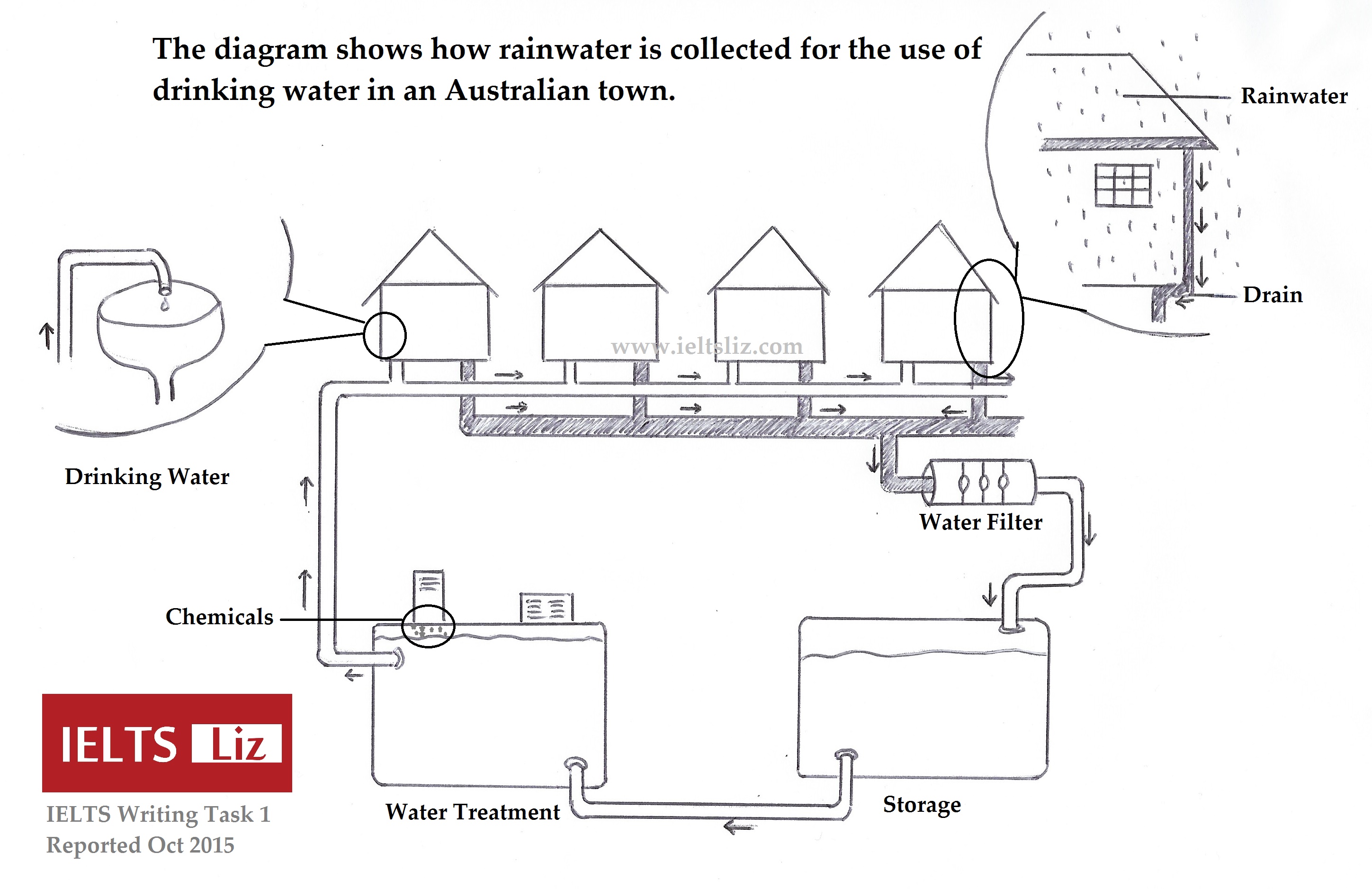
Paragraph: Rain is collected as it falls on the roof tops of houses. This water then passes through the drains and is eventually transferred to a water filter. The water is filtered to remove impurities before it then goes to a storage tank. From the tank it travels along pipes to reach the water treatment where it is treated with chemicals.

To see the model answer, click here: Diagram Model Answer

Articles: Using THE in grammar

In writing task 1, you are often given bar charts, line graphs and tables that refer to different countries and different nationalities. One of the biggest problems with this is the use of “the” with country names. Lets see how good you are with this. 

Which options below are wrong?

  1. the British
  2. the UK
  3. the America
  4. the Britain
  5. the English
  6. the US
  7. the Americans
  8. the England

ANSWERS

Click below for answers and for information about using “the” with country names.

Answers
  • Number 3 “the America” is wrong
  • Number 4 “the Britain” is wrong
  • Number 8 “the England” is wrong.

Details:

Almost all country names do not require the article “the”. We refer to France, England, Britain, Vietnam, Canada, China, India – all without “the”.

However, there are exceptions. Countries that are made up of a group of states or islands use “the”, such as the Philippines and the US. Any country that uses the words “states” or “united” or “republic” also use “the”, for example the UK, the US, the Republic of China. So, we would write “the UK” because it contains the word “united”, but we would write “Britain” without “the. Please note, the word “Britain” is not a synonym for England. Britain means the UK. Britain refers to the group of countries that make up the UK: England, Scotland, Northern Ireland and Wales. The word “Britain” actually means “Great Britain”.

We also need to use the article “the” when referring to nationalities as a group of people: the British, the Americans, the Chinese, the Vietnamese, the English. 

You can find full training for articles in essay writing in my Grammar E-book.

.

IELTS General Training Writing Task 1 Tenses

The examiner will mark you using the same criteria as the AC test, but with one difference in Task Achievement. The IELTS examiner will mark you on the following (each worth 25% of task 1). See below:

    • Task Achievement: Purpose, tone and expanding points
    • Coherence & Cohesion: Paragraphing, Linking Words
    • Vocabulary: Collocations, Spelling and Accuracy
    • Grammar: Sentence structure, tenses, punctuation, grammar range and accuracy

For students taking the General Training test. You will use a range of tenses in your letter depending on the aims and purpose. Below are some sample sentences:

  • I am writing to …. (present continuous)
  • I visited your store … (past simple)
  • …the poor service I have received (present perfect)
  • I hope the problem will be resolved … (future form and future passive)
  • I had hoped that … (past perfect)

Tips for IELTS Writing Task 1

Academic writing task 1 tips, click below:

All Tips, Model Answers, Free Video Lessons & Practice for IELTS writing task 1

GT writing task 1 tips, click below:

Essential 10 tips

Differences between GT and Academic Writing Task 1

FREE SUBSCRIBE

Subscribe to get new lessons & tips by email.

.

How I Scored 9 in IELTS Reading

“How I got Band 9 in IELTS Reading.”

Manal got band score 9 in IELTS reading with band score 8.5 overall.  Learn how she did it …

Below are her tips for a high score in GT reading:


 Getting 9 in IELTS reading
 

Manal’s Story and Tips for Band 9 in Reading

Oh I couldn’t believe in my wildest dreams that I scored a 9.0 in Reading. Reading was one of my weakest areas. After I gave the test, I had a gut feeling telling me that probably I scored a 9.0 in Reading. I even got to check all my answers in Listening as well as Reading.

I re-took the General test. The first time I attempted this test was in October – that time I scored an overall band score of 8.0 with L – 8.5, Reading – 7.0, W – 8.0, S – 9.0. I retook the test specifically to improve my Reading score so obviously I relentlessly practiced tests from the General section of Cambridge IELTS books. I was aiming for a minimum of 8.0 in reading.

 ————————————————–
Tips for Getting Band Score 9 in IELTS Reading
 
Here are some tips and strategies which you could post. Please feel free to make any editions necessary. I like to explain things in detail, otherwise I do not feel satisfied. You can make them more brief and concise.
 

Tip 1

Effective time management I can’t stress enough about it. One thing which I meticulously practiced when I did the reading tests was to enforce a strict time division for each section of Reading. Even though in the cambridge books, it states to keep a minimum of 20 minutes for each section. I’d suggest to keep 15 minutes OR less in Section 1 and 2 and to rely solely on skimming and scanning (I mastered to finish Section 1 and 2 in less than 15 minutes leaving me with ample time to solve Section 3 questions). Keep 30 minutes or more for Section 3- where you will need to do a little bit more than skimming and scanning. I usually managed to have 5-10 minutes for revision.

Tip 2

Do not bother reading the passages. It’s a waste of time.

  First, read the questions and circle the keywords and then try to look for those keywords or a synonym / paraphased text in the passage. For Section 1 and 2  – skimming and scanning will be your best friends. 

I didn’t even waste time reading Section 3. I just read the text associated with the questions. 

 Tip 3

One strategy that worked for me best was “not to overthink” when you are solving the reading questions and to go with your gut instincts – there is no time to think during the 60 minutes of tackling reading questions. Especially this applies to me, because I tend to overthink and over analyze a lot when I am stressed. I struggled a lot with the true false questions. But as I trained myself not to overthink, if the text is there either it will be the same meaning as the question or opposite. If text is not there – not given. 

Tip 4

For paragraph heading questions, only read the first and last sentence of each paragraph. A synonym or a related keyword in the heading title should be there. I also sometimes to be on the safe side for some questions read the second sentence as well.

Tip 5

Although, you will keep hearing from people practice and practice. I personally believe practice is inefficient if you do not learn from your incorrect answers. So it really helps to look at your mistakes and compare with the correct answers in the answer key and to reflect on where you made the mistake. I feel that way – you learn more efficiently.

 
Hope that helps.
Manal
 
Comment from Liz: Thanks for sharing your tips, Manal, and well done with your fantastic score!!
 
RECOMMENDED FOR YOU FOR IELTS Reading:

FREE SUBSCRIBE

Subscribe to get new lessons & tips by email.

.

IELTS Writing Task 1 Answer 2017

Below is an IELTS writing task 1 answer for 2017. The bar charts were reported by a student in February 2017 and recreated as accurately as possible. Please remember that IELTS do not release question or answers for each test. So, all reported tasks and questions are from students who have recently taken the test and have recreated their questions.

You can find links to more model answers for writing task 1 on this page: IELTS Writing Task 1, model answers & tips

IELTS Writing Task 1 Bar charts 2017

Download the above writing task 1 as pdf: IELTS 2017 Writing Task 1

IELTS Writing Task 1 Answer 2017

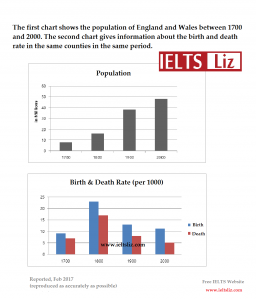
The two bar charts illustrate the population growth as well as the birth and death rates in England and Wales between 1700 and 2000. The population is given in millions, while the birth and death rates are per 1000 people.

Overall, there was a dramatic increase in the population of England and Wales over the 400 years. The birth and death rates initially witnessed a growth but then steadily declined over the period given. The birth rate was constantly higher than the death rate over the period given.

The population of England and Wales stood at under 10 million in 1700 which then doubled to around 15 million in 1800. By 2000, the figure had reached a high of almost 50 million, almost 5 times that of the population in 1700.

The birth rate was just under 10 per 1000 in 1700 and rose dramatically to peak at over 20 per 1000 in 1800 before dropping to slightly over 10 in the final century. The death rate showed a similar trend but was between 5 and 10 per 1000 less than the birth rate at all times.

187 words (I have put the word count for you. You shouldn’t do this in the test.)

Would you like to see more model answers for writing task 1? See the main pages below and click on IELTS Writing Task 1

Main IELTS Pages

Click to see more tips and practice lessons for IELTS:

Get my free lessons by email

Subscribe for free to get my new IELTS lessons sent to your email inbox.

IELTS Tops Scores Feb 2017: Band Score 9

Hi guys,

I thought you would like to see some of the top scores that some students have achieved last month (Feb 2017). I want you all to know that top scores in IELTS are possible.

Below you can also find useful IELTS preparation tips 🙂

Overall Band Score 9

Two students achieved OVERALL BAND SCORE 9  !!!

ielts band score 9 top results

See their results below:

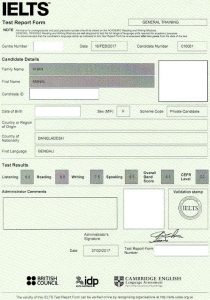
  1. Saif: L 8.5, R 8.5, W 9 and S 9 = overall band 9.  His personal details have been removed from the certificate. He mentioned in his email:

“You can also mention that I only used your videos as study material for test preparation. I watched around ten of your videos and that was good enough to get an understanding of the test layout.” 

  • Below are links to my videos and tips

Student Band Score 9

2. Niharika: L 9, R 9, W 8.5 and S 8.5 = overall band 9

“I already shared my scores on your blog post about the test results (N G CST is the username). Please feel free to share my results/experience with others. Reading others’ experiences helped me tremendously and I think sharing my experience will definitely be useful.  I resat for IELTS exam on 11 February 2017 in Saint Paul, USA.” Her speaking score went from 7.5 to band 8.5 after taking the test again. You can see her scores posted on my Post Results Page

Below are some of the tips for speaking I gave her:

Part 1 – Listen for the grammar in the question. Past tense question = past tense answer. Second conditional question = 2nd conditional answer. This is an English language test – show the accuracy of your language. For example:
Q: Can you swim?
A: Yes, I can but I wish you could do better and had more time to practice.
This demonstrates the right grammatical answer “can you = I can” and also future forms by adding hopes.
You will know the topics in part 1 because the examiner will say “Lets talk about sport” – then you know you will get 3 or 4 questions about sport. Or “moving on to weather” – now the topic has changed to weather. Listen for the topic and give examples of topic vocab.
Part 2
This is a chance for you to control the language you produce. A chance for you to show you deserve a high score by giving examples of great English.
Showcase your skills. You can add any information and change the prompts – but stick to the topic and pay attention to grammar tenses. Because you can add anything, it means you should be speaking for 2 mins. There is no reason to stop – you can say anything!!!!! So, show the examiner you have no problem to speak at length – fluency!!
Part 3
Discussion. This is chance to you to explain your ideas and develop ideas. It is not because you are marked on ideas, it is because you can show higher level language. The examiner doesn’t care what you think – only what your English is like. So, explain in depth and use higher level English.
 ———————————————————————–

Overall Band Score 8.5

6 students got an IELTS overall band score of 8.5 this month.
  • Gurinda = L 8, R 9, W 7.5 and S 8.5
  • Kristine = L 9, R 8.5, W 7.5 and S 9
  • Rohan =  L 8.5, R 9, W 7.5 and S 8.5
  • Patricia = L 9, R 9, W 8.5 and S 8.5
  • M Harris = L 9, R 8.5, W 7.5 and S 8.5
  • Ajuraj = L 8.5, R 8.5, W 9 and S 7
 ——————————————————–

Overall Band Score 8 or 7.5

  • 11 students got an overall score of 8
  • 13 students got an overall score of 7.5
 ———————————————-

IELTS Preparation Tips

Nobody finds IELTS very easy. Even band score 9 students need to prepare and develop the right skills for the test. Here are a couple of tips for your preparation. Click the links to open useful pages:
  1. Learn everything you can about the test. Learn the rules. Learn what is allowed and not allowed.  See my IELTS Information page to learn as much as you can about the IELTS Test.
  2. Develop your English. For speaking and writing, you need to avoid making errors in vocabulary and grammar. Find some Useful Websites to help you.
  3. Learn tips to ensure you use the right techniques, practice and FREE VIDEO LESSONS. Click below to open page:
    1. IELTS Listening Tips
    2. IELTS Reading Tips
    3. IELTS Writing Task 1 Tips
    4. IELTS Writing task 2 Tips
    5. IELTS Speaking
  4. Start learning Ideas for IELTS Topics and also Vocabulary for IELTS Topics
  5. Never do your IELTS test until you have practiced a real IELTS test at home under the time limit. You need to get the IELTS Cambridge Test books

Well done to all of you who have done so well in your tests!!!

And good luck to all of you about to take your test!!

Liz

[jetpack_subscription_form title=”Get my free lessons by email” subscribe_text=”Subscribe for free to get my new IELTS lessons sent to your email i

error: Content is protected !!