Practice Speaking Test: Video 2

This is the second practice speaking test video. Listen and answer the questions from each part of the speaking test. This helps you get used to the length of the test and the types of questions asked.

  1. Read through the instructions below before you listen to the test video.
  2. Listen to the questions, pause the video and answer the questions.
  3. After you finish your test, read through the transcript to check that you understood all the questions correctly (transcript given below video).
Instructions

Materials Needed:

  • pen and paper: for making notes for speaking part 2
  • phone or recording device: for recording your answers so you can play it back and check your speaking
  • a timer: for controlling the time in each part and making sure you don’t take more than 14 minutes for the whole test

Method:

  1. Have your materials ready (phone, pen, paper, timer)
  2. Press record on your phone, start your timer and press play on the video below (do this at the same time). Keep your recording device and timer going throughout the whole test. The test will take between 11 and 14 minutes.
  3. Part 1
    1. there will be 12 questions – you must answer each question immediately
    2. after each question, pause the video and record your answer
    3. don’t take less than 4 minutes or more than 5 minutes to answer all part 1 questions
    4. if you finish in under 4 mins, you answers are too short
    5. if you didn’t finish all 12 questions in 5 minutes, your answers are too long or you hesitated too much before answering
  4. Part 2
    1. in part 2, you have 1 min to prepare a talk and your talk must last from 1 to 2 minutes
    2. have your pen and paper ready
    3. the cue card (topic card with prompts) will be shown on the screen
    4. in the video, you will be given one min to make notes – use your pen and paper to prepare your talk
    5. in the video, you will be given two full minutes to talk (a skip button will appear after 1 minute so you can move to part 3 if you finish early but try and speak for the full 2 minutes)
  5. Part 3
    1. there are 5 questions in this part – you must answer each question immediately
    2. you should give long, detailed answers with examples if possible
    3. after each question, pause the video and record your answer into your phone
    4. don’t take less than 4 mins or more than 5 minutes to answer all part 3 questions
  6. After your  test has finished
    1. listen back to your recording and check your answers – see how you could improve your answers
    2. read through the transcript and check you have understood all the questions correctly
    3. listen to the speaking test model answers and see how you can improve your answers

Practice Speaking Test: Video 2

Transcript

Speaking Part 1

Hometown

Where is your hometown?

Do you like your hometown?

Are there any old buildings in your hometown?

How could you hometown be improved?

Food

What’s your favourite food?

Was there any food you disliked as a child?

Where do you usually buy your food from?

What do you consider is a healthy diet?

Sport

Do you like sport?

Did you play much sport as a child?

What is the most popular sport in your country?

Do you think men and women like similar sports?

 Speaking Part 2

A book you recently read

What type of book it is

Where you got the book from

What it is about

And explain why you enjoyed it.

Speaking part 3

What’s the difference between fiction and non-fiction books?

Do you think people read more books today than they did in the past?

How could parents encourage their children to read more?

Why do some adults read books for children?

Why do some people prefer ebooks?

Do you think paper books will one day disappear?

Recommended

Practice Speaking Test Video 1 with Model Answers

Common Mistake in Speaking Part 3

Below is a sample answer for a speaking part 3 question. Can you spot the mistake? This isn’t a mistake with grammar or vocabulary, it’s a mistake with technique.

Q. Do you think people do as much exercise today as they did in the past?

A. No, I don’t think so. My grandmother used to do exercise every single day when she was younger. Every morning she used to wake up early and go to the park to exercise with the other people before work. Unlike her, I only do exercise once a week because I have to start work really early and don’t get back home until after dark so I don’t have any time for exercise except on my day off which is just once a week.

Did you spot the mistake? Answer

This is a part 3 question about other people, so it is important to show the examiner that you can talk about people in general rather than your family or yourself as you did in part 1 and probably part 2. Below is a model answer with improved technique:

No, I don’t think so. Decades ago, people in my country used to do exercise every single day. They would get up early before work and go to the park to exercise. While some just did general exercises, like stretching and flexing, others would play sport or dance. Nowadays, on the other hand, people don’t really have the time. The majority of people have to commute to work early in the morning and don’t get home  until after dark which leaves very little time to do any form of exercise.

Recommended:
Error Correction for Speaking Part 1

IELTS Speaking: Musical Instruments Questions and Answers

It is possible to be asked about musical instruments in all parts of the IELTS speaking test. Below are some questions which mostly appear in part 1 but questions 4 to 5 can appear in part 1 and part 3. Two model answers are given below as well. This is topic currently being used in 2017.

You can vocabulary for types of musical instruments here: Musical Instruments Word List

Questions: IELTS Speaking Musical Instruments Topics

Check some possible questions for this topic:

  1. Did you ever learn a musical instrument as a child?
  2. If you could learn a musical instrument, what would you choose?
  3. If you had a child, what musical instrument would you encourage him/her to play?
  4. What traditional instruments are there in your country?
  5. Do you think traditional musical instruments have a place in modern society?
  6. How do you think traditional music could be made more popular?

Sample Answers for Part 1

Q. Did you ever learn a musical instrument as a child?

A. No, I didn’t but I always wish I had. If I had had the chance, I would have learned the guitar. The problem was that my parents thought it was more important to focus on school work than learn to play an instrument.

Q. If you could learn to play any musical instrument, what would you choose?

A. I think I’d probably go for the violin. It’s such a beautiful stringed instrument and I think the music that can be played on it, can be really haunting and moving. Yes, I’d definitely choose that one.

Sample Answer for Part 3

Do you think traditional instruments have a place in modern society?

Absolutely yes. Traditional instruments are part of our heritage and our identity. I believe that all school children should have the opportunity to learn to play one of them a part of their music lessons. For example, the tabla, which is like a pair of wooden hand drums, is a traditional instrument in our country and is part of most traditional songs. So, learning it would enable children to appreciate their country’s musical history more.

Recommended for IELTS Speaking:

Common Topics for Speaking Part 1

Free Video: Common Question Types in Speaking Part 1

Part 3 Common Mistakes

Current Topics in Speaking 2017

All Speaking Tips & Model Answers

Musical Instruments Vocabulary

All Vocabulary for IELTS

Main IELTS Pages

Develop your IELTS skills with tips, lessons, free videos and more.

Get my free lessons by email

Subscribe for free to get my new IELTS lessons sent to your email inbox.

Punctuation Practice for Writing

Below is an example of a complex sentence which does not have any punctuation. Not only does it lack commas but it also lacks full stops – it’s too long. This is a mistake that many students make. They think that the longer the sentence, the higher the band score – unfortunately this is not true. Check the three questions to help you decide how to punctuate it.

  • How many sentences do you think it should be?
  • Where would you put the full stops?
  • Where would you put the commas?

Write this sentence again using correct punctuation.

Firstly while it is thought that over population can be solved by limiting the number of children people can have it would be better to limit the number of people moving from rural to urban areas which is where the biggest problem lies because many people are moving to cities in search of employment so if the government tried to create more jobs in the countryside the problem would be solved almost instantly.

Answer

Firstly, while it is thought that over population can be solved by limiting the number of children people can have, it would be better to limit the number of people moving from rural to urban areas. This is where the biggest problem lies. Many people are moving to cities in search of employment so if the government tried to create more jobs in the countryside, the problem would be solved almost instantly.

Comments:

  1. After a linker such as “firstly” at the beginning of a sentence we usually use a comma.
  2. When you use the linker “while” or “although” at the start of a sentence, you will need a comma before the clause.
  3. The sentence using “while” is long so it is logical and necessary to have a full stop after it.
  4. The word “this” is used in order to divide the sentences and start a new one. This sentence is not long but it is still considered complex because it uses a “where” clause.
  5. The last sentence has two sentences joined with the linking word “so”. The first part is quite simple, while the second part is a second conditional which requires a comma between clauses.


Get my free lessons by email

Subscribe for free to get my new IELTS lessons sent to your email inbox.

IELTS Writing Task 2: Practice with Linking Words

Decide the best linking word to use in the following sentences:

  1. (Whereas / While / But)……………… individuals can make a considerable difference to environmental problems, they ought to be dealt with on a global scale to be solved effectively.
  2. Global warming is a prominent issue these days (due to / owing to / because)……………. it has a direct impact on the climate of countries all over the world.
  3. (As a result / Consequently / Thus)……………… of global warming, sea levels are rising which threaten many low lying lands.
  4. One of the best ways to deal with global warming is to reduce the emissions of fossil fuels, (specific / particularly / certainly)…………. from industry.
  5. Global warming affects weather patterns and can cause extreme weather (namely / as an example / like) ………………. heat waves, droughts and floods.
Answers
  1. While
  2. because
  3. As a result
  4. particularly
  5. namely


Get my free lessons by email

Subscribe for free to get my new IELTS lessons sent to your email inbox.

IELTS Yes No Not Given Reading Practice with Tips & Techniques

Yes, No, Not Given IELTS Reading Questions – useful techniques and practice lessons to maximise your score and help you save time in your reading test. These questions are often difficult for people to tackle so learning the right way will help you score points.

See the key tips and practice lesson below.

IELTS Yes No Not Given Reading Tips & Techniques

Are IELTS YNNG questions the same as IELTS TFNG questions?

They have the same techniques, the same approach, but there is a slight difference in the reading passage. When the passage is about facts and information then the question type will be TFNG because these questions are about matching statements with information in the passage. But when the passage contains a writer’s opinion or claims, then the question type is YNNG because these questions are matching statements with what the writer thinks or believes as shown in the passage. To sum up:

TFNG = factual passage = matching statements with information

YNNG = an opinion passage = matching statements with a writer’s opinion/claims

You will approach these questions in the same way.

Understanding the YNNG Instructions

IELTS Yes No Not Given Reading Questions Instructions

What do these answer options mean?

YES means that the full meaning of the question statement can be found in the passage and the meanings are the same.

NO means that the full meaning of the question statement is actually wrong and the passage shows it is wrong/incorrect/opposite/contradicted.

NOT GIVEN means that the information in the question statement isn’t found in the passage so we can’t say if it is correct or incorrect information. The passage doesn’t give enough information to choose Yes or No.

Your written answer must be YES or NO or NOT GIVEN. You can write these words in capital letters or lower case. But you can’t write True instead of Yes. If the answer is Yes, but you write True, then your answer is wrong. Always pay attention to that – don’t lose valuable points.

How to Tackle Yes No Not Given Questions

All these tips and techniques can be applied to TFNG questions as well. Click here for TFNG Reading Practice

  1. The same as TFNG questions, the YNNG answers will appear in order in the passage. This means you will find the answer to question 2 after the answer to question 1. This is useful to know because it will save you time searching through the whole passage. You will know that the answer to question 4, comes between the answer to question 3 and 5.
  2. Take time reading the question.
    1. Notice keywords in the question
      1. words that will help you locate the answer in the passage.
      2. words that might challenge the answer – words that make a subtle difference to the meaning.
  3. Think about synonyms and paraphrases that could be used to describe the information given in the question statement. Synonyms are words that have the same or similar meaning. Paraphrasing is writing the same information in a different way. Be prepared for both in the reading passage.
  4. Paraphrases and synonyms will help you locate the answer in the passage.
  5. Scan the passage and pay attention to keywords and paraphrases from the question.
  6. When you find the area that the answer is located in, read around that area. Read the sentences before and after.
  7. Remember, you can highlight words in the passage to help you. In the computer test, right click on the mouse and an option to highlight will appear. In the paper test, circle or underline the words with your pencil.
  8. After reading the area where the answer is located in the passage, go back to the question and start comparing them for meaning.
  9. Do not try to match words only. IELTS reading is about deeper meaning.
  10. Your aim isn’t to understand the whole passage, but to locate answers and then analyse the deeper meaning of those few sentences relating to the question.
  11. Be careful of comparative questions. The comparisons need to be the same in the question and passage.
  12. Be careful of quantifiers, such as “all” and “some”. ALL means 100%, SOME means it is not 100%.

Now it’s time for you to try some Yes, No, Not Given questions in the passage below.

IELTS Yes No Not Given Reading Practice

YNNG Passage 1: Richard, the Lionheart

King Richard I of England is one of the most iconic kings of England, known as the Crusader King and also as Richard the Lionheart. He spent practically all his reign outside England fighting wars in the Middle East and France to the point that England must have seemed like a foreign, distant land to him. It seems strange to us today to consider a King of England so wholly detached from the country that he represented and ruled. To pay for his wars and crusades, he taxed the English so heavily that is caused widespread discontent amongst the populace. While it can be said that he was a peerless warrior in battle, he was a poor King of England. He has often been criticised not only for his neglect of England and the welfare of the common person, but also for squandering the lives of so many of his followers as they followed him into battles far from their homeland. And yet remarkably, many English people still remember him quite fondly as a chivalrous king who was the epitome of a knight with bravery and military skill.

Questions 1-8

Do the following statements match the views of the writer in the passage? Write Yes, No or Not Given as your answer.

  1. King Richard idolised fame.
  2. While King, Richard never resided in England.
  3. King Richard looked down on the English culture.
  4. Many English people did not agree with being taxed so much.
  5. He was a fighter beyond compare.
  6. The people who followed him into battle were common people from England.
  7. King Richard did not place much consideration on the value of a human life.
  8. King Richard is considered by all English people as a courageous knight.

Answers

Click below to reveal the answers.

Answers
  1. NOT GIVEN
  2. NO
    • He spent much of his reign outside England, but not all his reign.
  3. Not Given
    • The passage shows that Richard probably didn’t connect much with the English culture because he spent so much time abroad, it doesn’t give any information about whether he lacked respect (looked down on) the English culture.
  4. YES
    • the passage shows the population of England showed “widespread discontent” with the heavy taxes. “widespread” means many thought this, but not all.
  5. YES
    • peerless = beyond compare (there were no peers who were his equal)
  6. NOT GIVEN
    • the passage show King Richard did not care about the welfare of the common people. But we do not know who his followers were precisely.
  7. YES
    •  in the passage: “squandering the lives of so many of his followers” – meaning to waste people’s lives in battle.
  8. NO
    • The challenge with this question was the word “all” in the question and “many” in the passage.
Vocab Builder
  • reign = time in power / sovereignty
  • to tax heavily = to take a lot of money in tax
  • widespread discontent = many were not happy
  • the populace = people living in a particular country
  • peerless = unequalled / unrivalled
  • warrior = fighter / soldier
  • battle = war / conflict
  • squandering = to waste something in a foolish or reckless manner
  • the epitome of = the best possible example of

.

I’ll upload another YNNG reading passage soon for you. All the best, Liz

RECOMMEND FOR YOU 

FREE SUBSCRIBE

Subscribe to get new lessons & tips by email.

.

New Year in Vietnam: IELTS Listening Practice

This is an IELTS listening exercise which I have made for my Vietnamese students about their wonderful New Year’s celebration called Tết. It is a Sentence Completion listening practice so you will need to fill in the gaps as you listen. This is the most common type of question to get in IELTS Listening. Remember to read the questions before listening to the audio. Answers do come in order.

Tet IELTS listening

Tết Holiday (Vietnamese New Year)

Listening Practice

Complete the sentences using no more than three words.

  • Another name for Tết is (1)  ………………
  • One typical dish at this time is a soup which is made from (2)  ………………..
  • (3) …………… is given to older people and kids.
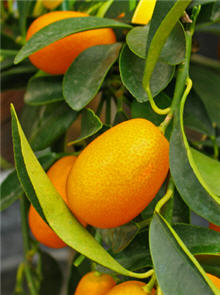
  • At Tết, houses are adorned with  (4) ………………… and kumquat trees.
  • (5)  ………..  the house is forbidden during Tết.

.

ANSWERS

Click below to reveal the transcript, answers and vocabulary. I provide the transcript so you can check the answers in context and improving your pronunciation.

Transcript

Tết is celebrated on the same day as Chinese New Year, though exceptions arise due to the one-hour time difference between Hanoi and Beijing. It takes place from the first day of the first month of the Vietnamese calendar (around late January or early February) until at least the third day. Vietnamese people consider Tết to be the first day of spring and the festival is often called spring festival.

Many Vietnamese prepare for Tết by cooking special holiday foods and cleaning the house. These foods include square rice cake, Vietnamese sausage, dried young bamboo soup, sticky rice and boiled chicken. There are a lot of customs practiced during Tết, such as visiting a person’s house on the first day of the new year, ancestral worship, wishing New Year’s greetings and giving lucky money to children and elderly people.

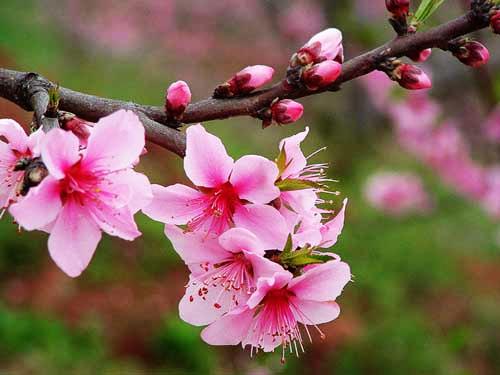
There are certain things to observe during Tết and certain things to avoid. Houses are thoroughly cleaned in preparation for Tết. People buy kumquat trees and peach blossom to decorate their houses. There are dragon or lion dances in the streets. New clothes should be bought for every member of the family. And on New Year’s Eve, the kitchen god, Ong Tao, is welcomed back to the kitchen. On the other hand, some things must be avoided. Sweeping during Tết is taboo and considered to be unlucky, since it symbolizes sweeping away the luck; that is why they clean before the new year. It is also taboo for anyone who experienced a recent loss of a family member to visit anyone else during Tết.

Note: I made a mistake in the audio in the second sentence. I said Chinese instead of Vietnamese. Sorry to all my Vietnamese students for that. Liz

 Answers

  1. SPRING FESTIVAL
  2. (DRIED) (YOUNG) BAMBOO
    • This means there are three possible answers to this question:
    • bamboo / young bamboo / dried young bamboo
    • some books use brackets to show optional answers in the answer keys – but you can’t do this in your test. You can’t use brackets in the listening test.
  3. (LUCKY) MONEY
  4. PEACH BLOSSOM
    1. both words are needed
    2. no punctuation is needed between the words – just leave a reasonable space
  5. SWEEPING
 Vocabulary
  • arises = happens
  • it is often called = it is frequently named
  • ancestral worship = praying to ancestors (past family members)
  • to observe = to follow (this is when relating to celebrations or festivals)
  • sweeping = using a brush to clean the floor
  • luck (noun) / lucky (adjective)
  • taboo = forbidden

MORE VOCABULARY

square cake

square cake (bánh chưng) = A cake which is made from sticky rice, mung bean and pork wrapped in leaves.

kumquat

kumquat = A small citrus fruit similar to an orange. Both peel and flesh is eaten.

peach_blossom

peach blossom = flowers on a peach tree

.

If you would like me to make a lesson about a festival or part of your culture, please let me know the details by posting a comment in the box below. Regards, Liz.

Musical Instruments Vocabulary

Below is a list of common musical instruments divided by type. How many instruments do you know? Can you pronounce them all correctly?

  • How do you pronounce the word “guitar”? Answer
    The word guitar is pronounced /ɡɪˈtɑː/ . The “u” is a silent letter. See below to listen to the pronunciation.
  • What kind of instrument is the violin? Answer
    It’s a small stringed instrument made of wood.
  • What traditional instruments are there in your country? Answer
    Here are some examples of traditional musical instruments around the world: in India, there is the sitar (a stringed instrument), in China there is the gu-zheng ( a 21 stringed instrument), in Vietnam there is a bamboo xylophone ( percussion instrument), in Italy there is the mandolin (similar to a guitar), in Australia there is didgeridoo (a wind instrument made from the branch of a tree), in Egypt there is the sistrum ( a u-shaped framed drum) and in Scotland there are the bag pipes (a wind instrument), in Iraq there is the oud (a stringed instrument similar to a lute).    ……Please note that this answer is not an example of how to answer an IELTS question, it’s just some general information for you about instruments in your country – if your country has an instrument which is not in this list, please let me know. Liz 

Vocabulary Practice

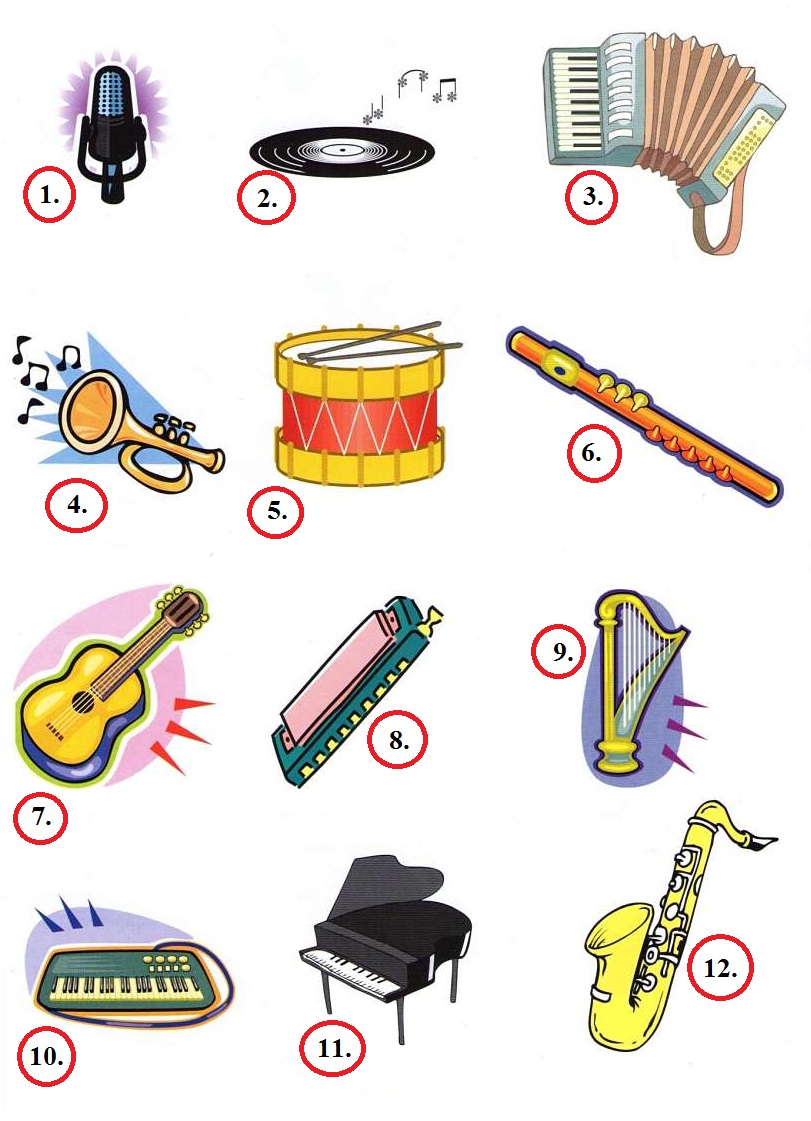
Can you label the picture below?

musical instuments

Answers

Listen to the answers

  1. microphone
  2. record / vinyl
  3. accordion
  4. bugle
  5. drum
  6. flute
  7. guitar
  8. harmonica
  9. harp
  10. keyboard
  11. piano
  12. saxophone


Types of Musical Instruments

Stringed Instruments

  • guitar
  • violin
  • cello
  • viola
  • harp
  • banjo
  • electric guitar
  • fiddle
  • lute
  • sitar

Listen to Audio


Wind Instruments

  • flute
  • saxophone
  • trumpet
  • pipes
  • recorder
  • tuba
  • oboe
  • bagpipes
  • clarinet
  • bugle
  • harmonica

Listen to Audio


Keyboard Instruments

  • piano
  • electronic keyboard
  • organ

Percussion Instruments

  • drums
  • triangles
  • xylophone / bamboo xylophone
  • wood blocks
  • accordion (oops this is actually a keyboard instrument)

Listen to Audio

Audio for both key board and percussion instruments


 Recommended

IELTS Speaking Part 1: Musical Instruments Questions and Answers (available from Feb 20th)

error: Content is protected !!