IELTS Listening Test Changes Jan 2020

Starting January 4th, the IELTS listening test will have the following changes:

IELTS Listening Test Change 1

There will be no example played in part 1. Usually there would be an example answer for you to listen to at the start of the recording. This helped you get used to the accent and check the volume if you were using headphones. This example has now been removed. This is a very important change that you need to be ready for. You must listen carefully from the start of the recording for answer 1.

IELTS Listening Test Change 2

The word “sections” will now be changed to “parts”. This won’t affect the actual test, but it is something that is useful to know.

IELTS Listening Test Change 3

There will be no page number references. But there will still be references to question number. Again, this is no big change for you, but it is something to be aware of.

There are no other changes to the IELTS Listening Test or the Reading, Writing or Speaking Tests. For pros and cons of the computer based test, see this page: Computer based IELTS. For useful information about the IELTS test does and don’ts, see this page: IELTS FAQ Visit the Official IELTS page for verification of the above changes: IELTS Listening Test Format

…………………………..

Subscribe to get New Posts by Email

IELTS Line Graph Model (Band Score 9)

This model line graph for IELTS is estimated at band score 9. The model answer below is for IELTS writing task 1 academic paper. Use this sample writing as a template for structure, key features and language for any IELTS line graph. There are also some tips given below to guide you and help you understand how to describe this type of graph.

Line graphs will typically have between two or five lines. However, it is possible to have more than five lines. Depending on how many lines you have, you’ll need to decide how much data you present in your report. See the tips at the bottom of the page.

IELTS Line Graphs with Model Answers

IELTS Line Graph 1

This line graph is typical of IELTS writing task 1. It shows three lines and one of the lines doesn’t have any data for the first few years. See the model answer below to learn how to tackle this task.

The graph below shows the consumption of three spreads from 1981 to 2007.

IELTS Line Graph

IELTS Line Graph Model Answer

The line graph illustrates the amount of three kinds of spreads (margarine, butter, and low fat and reduced spreads) which were consumed from 1981 to 2007. Units are measured in grams.

Overall, the consumption of margarine and butter decreased over the period given, while for low fat and reduced spreads, it rose.  At the start of the period, butter was the most popular spread. Margarine was the most widely consumed in the middle of the period but, by the end, low fat and reduced spreads was most popular.

With regards to the amount of butter used, it began at around 140 grams and then peaked at 160 grams in 1986 before falling dramatically to about 50 grams in the last year. Likewise, approximately 90 grams of margarine was eaten in the first year, after which the figure fluctuated slightly and dropped to a low of 40 grams in 2007.

On the other hand, the consumption of low fats and reduced spreads only started in 1996 at about 10 grams. This figure, which reached a high of just over 80 grams five years later, fell slightly in the final years to approximately 70 grams in 2007.

IELTS Line Graph 2: Five Lines

Essential tip for a line graph with many lines:

  • Don’t get lost in too much detail. Going beyond 200 words is very rare. Most tasks require only 170 and 190 words. Getting lost in detail and writing too much will give you a low score for Task Response, which counts for 25% of your marks. See this page: Band scores, Marking & Tips for bands 5 to 8.

IELTS Line Graph Model Answer

Line Graph Model Answer

The line graph illustrates how many weekly hospital admissions there were in Fortsmith, Adlin, Stanton, Bardley and Oxley, which are hospitals located in a European country, between 2004 and 2018.

Overall, for most of the period given Bardley had the most admissions, while Stanton had the least. Oxley was the only hospital to see a decline in admissions and Fortsmith was unique in that their admission figures remained relatively stable over the period. Admissions to all other hospitals increased during the years given.

Admissions to Oxley hospital started at just under 250 a week in 2004 but more than halved by the final year (just over 100 admissions). Fortsmith weekly hospital admissions fluctuated at around 200 for the whole period.

On the other hand, the number of people admitted to Adlin hospital rose dramatically from just over 100 in the first year to 250 by 2018. Likewise, Bardley also saw a rise from 200 to peak at over 250, the highest for any hospital. In terms of Stanton hospital, only approximately 70  people were admitted in 2004 and this gradually climbed to slightly over 150 in 2018.

Words = 187

Below are key steps for tackling an IELTS line graph:

  1. Paraphrase the line graph information for your introduction.
  2. Add axis information to your introduction if needed, such as categories or units.
  3. Put main trends and any other key features in an overall statement. The overview is the most important statement in your writing task 1. One sentence for an overview usually isn’t enough.
  4. Organise body paragraphs logically because you are being marked on this. Make sure to always have two body paragraphs (three occasionally). Decide which lines show trends that should be grouped together.
  5. Make sure each sentence in the body paragraphs has numbers and dates to support it. This is vital for Task Response.
  6. Ensure all data is accurate. If you are not sure the number is precise, write “about” or “approximately”.
  7. Use a range of linking words. Try not to repeat them.
  8. Aim for around 180 words for writing task 1. Try not to write over 200 words. More does not mean better.
  9. Line graphs have specific vocabulary that you must showcase. Learn nouns, adjectives, verbs and adverbs carefully: Line Graph Vocabulary

RECOMMENDED FOR YOU – IELTS WRITING TASK 1

Click below:

FREE SUBSCRIBE

Subscribe to get new lessons & tips by email.

.

Happy New Year: 2020

Hi guys,

Wishing you all a very Happy New Year and hoping that this coming decade will bring you all you desire.

Below you will find useful links to help you prepare for your IELTS test. Click to open and start learning:

IELTS Band Scores Explained: A Must Read Page

Useful Links & Resources

How to Prepare IELTS: Video Tutorial

Liz’s Android App Quiz: Test your knowledge of IELTS with my IELTS app quiz

Band Score 8 Tips from a successful IELTS candidate in 2019

Band Score 8.5 Tips from a successful IELTS candidate in 2019

Top Results: To give you motivation and inspiration

Ideas for Essay Topics E-book: Sample Chapter

Coming in 2020

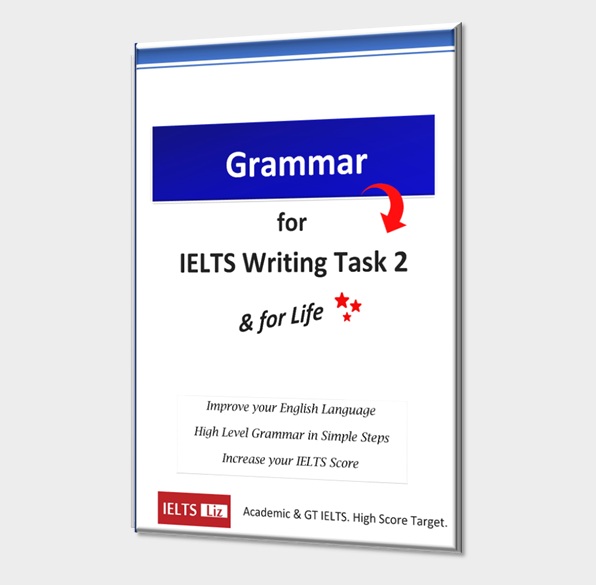
This year I will be releasing my “Grammar for IELTS Writing Task 2” E-book.

This e-book will cover all aspects of grammar that you struggle most with and provide you with lots of sample sentence structures to help you improve your grammar score. There will also be grammar exercises to help you build accuracy.

I’ll post a sample chapter of this e-book soon. I hope to have the e-book ready for purchase in either March or April this year. It is already written but needs formatting and final edits.

Again, my best wishes for this new year and new decade to all of you preparing for IELTS and your family.

All the best

Liz 🙂

Tips from a Band 8 IELTS Candidate

Below are tips from a successful IELTS candidate for getting band 8 overall. For the purpose of anonymity I have called her Annie.

Annie’s Result

  • Listening = 8.5
  • Reading = 8.5
  • Writing = 7.5
  • Speaking = 8

Computer or Paper Test Tips

Choosing the test format (Paper/Computer) wisely: I was weak in listening and no matter what I couldn’t score beyond 7.5 in my practice tests. While I was taking my practice tests on computer, I realised that I had no opportunity to highlight the text or make notes for reference. It was the same case with reading. My writing and typing speed were relatively same. So, I opted for paper based test and it was the best decision as evident from my listening and reading scores. Although I lost quite a lot of time in editing my essay on paper and I feel I could have scored band 8 through typing, listening and reading were my priorities. 

Listening Tips

Like Liz and other tutors reiterate, answers often appear as synonyms. Learning alternative ways in which the same thing is expressed and practicing to identify the synonymous language is extremely helpful. If you’re unable to do so while listening, note down the words used and come back to it while answering. It happened to me twice or thrice and the notes helped me. The key is to stay with the audio and not get lost if you miss something. Recheck the word fit into the answer sentence before you finalize the answer. This eliminates undesired mistakes in tenses, singular and plural, spelling etc. 

Reading Tips

Patience is the key. It’s important to develop stamina to sustain your focus required to complete all sections. Keyword search is the most effective way of targetted reading covering only required parts. When I felt stuck, I chose to answer easy questions first and the quick wins kept me going. Especially in ‘True, False, Not Given’ type, the strategy that aids decision making is crucial. For example, a statement is false if there’s a clear contradiction, a statement should be marked as ‘Not Given’ if relevant information is totally absent. The last two passages are actually informative, sometimes fun to read. If you look at passages with an intention to make sense out of the content instead of just answering, you can connect the dots and derive the answers with much more ease.  

Writing Tips

The biggest mistake I made is to change my stance mid-way. After I wrote the first paragraph, I felt I was able to get adequate points on the other side of motion. I lost time in erasing and re-writing. Even if it means spending good amount of time, identify your stance clearly so you’ll spend rest of the time strengthening your content. We’ll never be able to practice all possible essay questions or preempt our topics, but we can always carry a skeletal structure around which the essay could be developed. Needless to say, an essay with good range of vocabulary is a definite winner. That said, do not force fit words. Throw in a few words to make your essay look smart and that’s just about it.

Speaking Tips

I was quite confident about the speaking test. In fact, I did well in first two parts. Part three was a shocker and I struggled to express my views about the topic. What you need to remember while answering is that you’re not judged based on your choices. You may either like or dislike something and the idea is to express what you feel with clarity in thought. This acknowledgment then made me more comfortable and eased me during the rest of the conversation.

That is all from my end. Annie.

Message to Annie: Thank you so much for sharing your tips. I know many people will benefit from them and be inspired by your results 🙂 Liz.

More IELTS Candidate Tips

Click below to read more tips from successful IELTS candidates:

How I scored Band 9 in Speaking

How I scored Band 9 in Reading

How I scored Band 8.5 Overall

How I scored Band 9 Overall

…………………….

Subscribe for Free for New Posts Delivered by Email

How many Sentences for an Essay Introduction

IELTS Writing Task 2 Academic & GT Essay Introductions

Hi guys, here are model answer introductions and essential tips for Tuesdays lesson on writing task 2 introduction paragraphs. I hope you find this lesson useful 🙂

1) How long should the introduction be?

Most essays will require only two sentences for your introduction paragraph. You will need to write a background statement and a thesis statement. There is no need to write more. It won’t help your score to add more to the introduction. Your introduction should usually be between 40-60 words. Below are details of the content of an introduction paragraph.

2) Background statement:

This is the first sentence of your essay and it paraphrases the essay question. This is the way to introduce the issue or issues given to you by IELTS because that is what your essay is responding to. Paraphrasing is a way to avoid copying directly from the essay question by using your own sentence. For example:

Essay Question: The government should allocate more funding to teaching sciences than on other subjects so that the country can develop. Do you agree or disagree?

Background: It is often thought that in order for the country to progress more funding ought to be allocated to teaching sciences instead of other subjects.

As you can see above, the background statement contains exactly the same information but written differently. It is an easy sentence to write if you practice your paraphrasing skills. You can find a useful page on paraphrasing here: Paraphrasing Background Statements and examples of background statements here: Background Examples

3) Thesis Statement

Your thesis statement will introduce your answer or your opinion. It is the second and final statement needed in the introduction. It shows the reader the direction you plan to take in your essay. Furthermore, it is important that you write this carefully and clearly because it will impact both Task Response and also Coherence and Cohesion which together count for 50% of your marks.

The thesis does not need to be detailed. It is possible to split it into two sentences if you need more space, but mostly it will be one sentence only. For example:

Essay Question: The government should allocate more funding to teaching sciences than on other subjects so that the country can develop. Do you agree or disagree?

Thesis Statement Agree: I completely agree that focusing on science subjects at school is essential for a country’s future.

Thesis Statement Disagree: In my opinion, funding should not focus on the sciences but should rather be allocated to maths, technology and languages.

Thesis Statement Partial Agreement: While I agree that the sciences do need extra funding, this should not be at the expense of other subjects which are also crucial to a country’s development.

As you can see above, each thesis statement is simply written and presents a clear opinion. Do not try to create a complicated thesis statement. Your opinion and having a clear position is more important.

Short thesis statements

Yes, it is possible to write just a few words: “I completely agree with this position.” or “I strongly agree with this opinion.” However, I personally prefer to showcase more language skills with a slightly longer thesis statement as shown above.

Below you can see a full introduction for a one sided approach:

It is often thought that in order for the country to progress more funding ought to be allocated to teaching sciences instead of other subjects. In my opinion, funding should not focus on the sciences but should rather be allocated to maths, technology and languages.

4) Giving Your Opinion in IELTS Essays

Yes, you need to give your opinion if the instructions ask for it. Using the words “this essay” does not represent your own personal opinion. If you are asked for YOUR opinion, you need to use I or MY – failure to do this will result in a lower score. See this page for more details: How to give your opinion

5) More Writing Task 2 Tips

You can find more IELTS writing task 2 tips, model essays and lessons on this page: IELTS Writing Task 2 . All main sections of this website are access through the RED MENU BAR at the top of the site.

High Band Score Essay Techniques: Advanced Lessons

If you are struggling to hit band 7 or you need more help understanding how to write a high band score essay, get my Advanced Writing Task 2 lessons which you can find here: Liz’s Advanced Lessons.
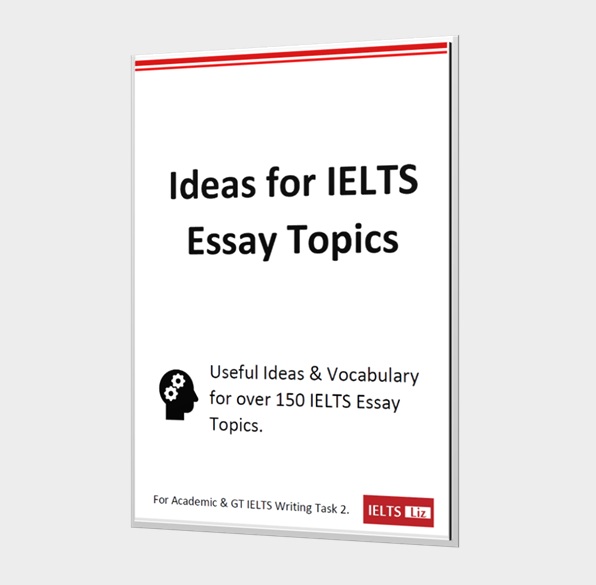
You can also find a useful e-book about Ideas for Essay Topics. Containing over ideas for over 150 essay topics. Ideas are presented as vocabulary exercises to help you improve your range and accuracy in English.

.

6) How to Write an Introduction

Here is a useful video tutorial I made some time ago which helps you understand more about writing an introduction paragraph:

.

…………………….

Subscribe to Get New Posts by Email

Essay Introduction Practice 1

Hi guys,

Below is an essay question that is common to get in IELTS writing task 2 Academic & GT tests. This is your chance to post your introduction and compare it to others. Writing the introduction is the easiest part so use this lesson to practise.

Essay Question: The government should allocate more funding to teaching sciences than to other subjects so that the country can develop. Do you agree or disagree?

Answer

The answers to this lesson are now available.

CLICK HERE: MODEL ANSWER & TIPS FOR INTRODUCTIONS

Remember: you need to have a background statement and a clear thesis statement. Always aim for clarity rather than aiming to impress. Avoid errors and keep your meaning clear. Keep it under 60 words.

All the best

Liz

……………………….

Subscribe to get New Lessons by Email

Why the IELTS Speaking Examiner Stops your Answer

Learn why the IELTS speaking examiner might interrupt your answer in the IELTS Speaking Test. A lot of IELTS candidates are shocked that the examiner stops them in the middle of their answer to ask a new question. They are not prepared for interruptions and when it happens, they lose focus, get stressed and their performance suffers. Don’t let this happen to you. Be prepared and understand why the examiner is interrupting your answer.

Why the IELTS speaking examiner interrupts your answer

There are three main reasons why the IELTS speaking examiner might interrupt you and not let you finish your answer.

  1. The main reason is that time is limited. If your answer is slow, lengthy or not giving enough good English, the examiner might choose to stop you and start with a fresh question. It’s one way that the examiner can help guide you and keep you on track.
  2. Another reason is that you already gave the examiner the aspect of language they wanted to hear. When this happens, the examiner doesn’t need to hear the rest of your answer and can interrupt you to move on. Let me give you an example:
    1. Question: What changes would you make to your home if you could?
    2. Answer: If I could, I’d expand the living room so that we have more space and maybe build a patio. But I’d also like to ….
      1. Comments: Why would the examiner stop the answer after only one sentence? Well, this question was testing if the candidate could speak in the hypothetical tense (second conditional). The candidate already showed that this tense was easy for them, so the examiner can stop them and move on to a new question. Remember, some questions are testing specific language functions and once you’ve shown that ability in your answer, the examiner could stop you so that they can test other aspects of your language.
  3. The examiner will also interrupt you if time is up in any part of the test. This is actually obligatory.

It is important that you understand this fully:

  • The IELTS speaking examiner is not being rude or lacking concentration by interrupting you. In fact, when they change questions, they usually have a valid reason for doing so, which is neither bad or good as far as you are concerned.
  • The examiner is not trying to undermine your confidence. You actually should be prepared for interruptions to your answers if you have prepared fully for the test. This aspect of the IELTS speaking test should not be a surprise to you.
  • Being off topic does not affect your score in IELTS speaking. So, when the examiner interrupts you to redirect the question, it won’t affect your score. It is the examiner helping you.
  • The examiner isn’t interrupting you because you gave the wrong answer. There are no right or wrong answers – only opportunities to showcase your English. Interrupting your answer gives you a chance to tackle a new question.
  • The examiner does not rapidly ask questions to test your ability to handle stress – this is not how the IELTS speaking test works. The examiner only has a certain amount of time to test your English thoroughly so that they can give you a fair and valid score. Often you might show a wider range of English when you are given more different questions and topics.
  • Each examiner is different. Some examiners do tend to interrupt more than others so always be prepared. Whether they interrupt a lot or not at all doesn’t mean one examiner is better than another.

Always remember that the examiner is only testing 4 things: fluency, vocab, grammar and pronunciation. Nothing else is marked. 

Will interruption to your answer lower your score?

No. 100% not. This is a choice made by the examiner to cover all language functions and direct the test in the way the examiner wants.

How Can you Prepare and Cope for Interruptions

  1. You should know that the IELTS speaking examiner might interrupt you before you enter the test room. This is knowledge about the test that you ought to learn during your exam preparation.
  2. When it happens, don’t be upset or confused. 
  3. Being interrupted isn’t bad or good. It’s just part of the testing system and will help the examiner assess many parts of your language.
  4. Don’t think you made a mistake. The examiner might be moving on because your answer was actually excellent already. For whatever reason, it is simply a way for the examiner to manage the test and you don’t need to be concerned about it.
  5. Keep talking until you are interrupted. Let the examiner manage the test their way.
  6. As soon as you are interrupted, focus on the new question.
  7. Regardless of interruptions, be confident and try to enjoy the test. It is an informal speaking test.
  8. Remember, interruptions are normal.

Free IELTS Speaking Tips & Model Answers

Click here to learn more about IELTS Speaking for free: IELTS Speaking Tips & Answers

……………………….

Subscribe to get new posts for free in your inbox


Answers to Autism Hour Listening

Below you can find the transcript and answers to the listening exercise about Autism Hour. If you have not completed this lesson, please do so before looking at the answers below. Click here: Autism Hour Listening Lesson

Transcript & Audio

There are 700,000 autistic people in the UK. Autism is a lifelong disability which affects how a person communicates and responds to people and how they experience the world around them. Although most of the public have heard of autism, few actually understand what it is like to live with it and how to support someone with autism. Autism Hour is when businesses agree to dim their lights and reduce background noise, such as music, to create an environment that is more suitable for autistic people. Autistic people have difficulty processing sensory information leading to sensory overload which can cause great stress and even physical pain. In a world geared towards neuro-typical people, this problem can leave autistic people restricted in where they can go and what they can enjoy. Autism Hour not only opens doors to autistic shoppers and their families, it also provides an opportunity for staff members to learn more about autism which is essential if autistic people are to get the support and respect they need from society. Autism Hour is also important in bringing to light the general affect that sensory information can have on people who are not neuro-typical or who have an illness affecting their ability to cope with light or noise or any other type of sensory information.

.

Answers

  • 1. Autism can affect how someone ……….. with others and how they experience the world.
    • Answer: COMMUNICATES
    • You cannot have “COMMUNICATE” or “COMMUNICATION”. 
    • The sentence must be grammatically correct when it is completed. 
  • 2. Businesses should ………. their lights and reduce noise during Autism Hour.
    • Answer: DIM
  • 3. Too much light and noise and lead to a sensory ………… which can be painful for people with autism.
    • Answer: OVERLOAD
  • 4. Society is mostly …………. towards neuro-typical people.
    • Answer: GEARED
  • 5. Some people with other illnesses can also struggle to cope with ………… information.
    • Answer: SENSORY
      • It is not possible to have the words “LIGHT” or “NOISE” or any other word as the answer. You cannot write “light information” as a compound noun in English.

Tip: Always remember that the listening test is also testing your understanding of English grammar and English vocabulary.


Subscribe to Get New Posts by Email
error: Content is protected !!