Tips to get a higher score in IELTS
Some students take the test again and again and do not take the time to understand what they need to do to get a better score. This page is a brief overview to help you understand your responsibilities to ensure a higher score. Read this page VERY carefully.
What affects your Score?
There are two main things that determine your IELTS score.
- Your level of English
- Your understanding, techniques and skills in IELTS
Below are tips and information to help you tackle both of these areas.
1. Your Level of English
If you want a high score, you must have the right level of English for your aims. Some candidates repeatedly get band 6 or 6.5 when they are aiming for band 7. Doing the test again and again won’t help if your English isn’t good enough. And tips will help maximise your score, not alter your level of English. If you are making frequent errors in your English and have limited accuracy, you will struggle to get a high score. It is time for you to be honest with yourself about the level of your own English. You don’t really need a teacher to tell you this. You should know for yourself if your English is accurate and flexible or not.
IELTS is a language test and your band score is based on your level of English. This means if you want a higher score, you need to improve your English. It also means that “tips and techniques” won’t guarantee a big increase in your score. If your English is not strong enough, you won’t get a high score in IELTS.
You can gain awareness of your own level of English in many ways. Here is one way:
Go to the following link in this paragraph which contains vocabulary and an exercise about Crime and Punishment topic. How many words do you know from the lists given? Is your pronunciation accurate? Do you know the spelling? When you do the exercise, do you get many wrong or many right? If you get some wrong, look at the reason why. If the reason is because you didn’t know enough English – that tells you a lot. Band 9 students will know about 90-100% of the words. Band 8 will probably know about 80-90% (these are rough estimates). See this page: Crime & Punishment Vocabulary Start becoming more aware of your own English language.
Each lesson on this website will help you gain insight into your own English and the mistakes you make. Mistakes are a good way of judging your level:
- band 8 = most sentences are error free
- band 7 = few errors
- band 6 = some errors
- band 5 = frequent errors
Some mistakes will be made because you didn’t know what the question wanted you to do – this is about technique (explained below). But some of your mistakes will be because you didn’t know enough English. Always review the reason you get answers wrong.
Can tips increase your score?
Tips will only help you if your English is strong enough. If your English is strong, but you are not getting a good score, you will need to review your IELTS exam techniques and your understanding of IELTS.
If your English isn’t strong enough, tips won’t make a big difference. If your English is about band 5.5, then you will probably get between band 5 and 6 in your test.
IELTS Liz E-books
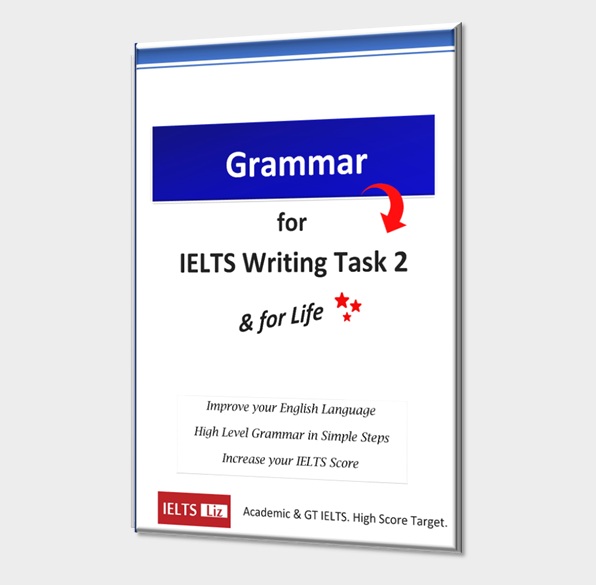
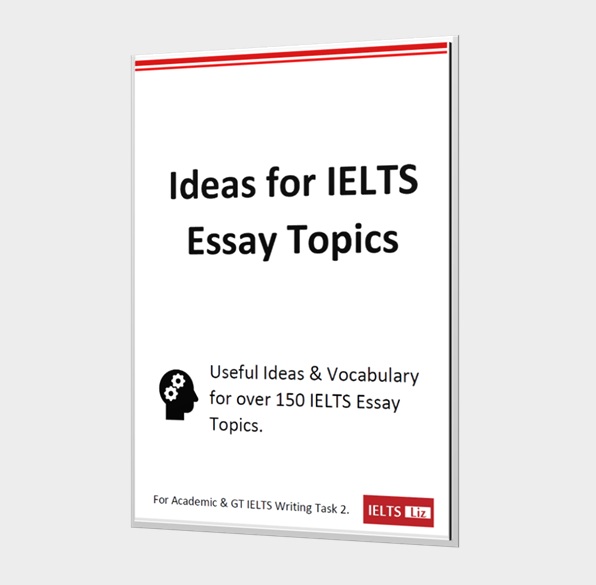
I do have two e-books which can help you. My Grammar for Writing Task 2 is a great e-book which helps you develop your grammar and take your English to a higher level. It is packed with useful tips for IELTS as well. I also have an Ideas for Topics e-book which focuses on ideas for topics and vocabulary. You can get these e-books in my online store: IELTS LIZ STORE.
2. IELTS Exam Techniques
Yes, of course they can. Techniques are about how to tackle different types of questions and strategies for approaching questions. The more you understand about IELTS questions, IELTS marking criteria, IELTS band score requirements and how to avoid mistakes, the better you will do. Techniques will help you reach your potential. If you have good English, but are not scoring well, techniques will help you push your score higher.
However, techniques are of limited use if the problem is your English language. So, make sure you review your English and have realistic expectations.
Essential Preparation for IELTS
All students should work on two areas:
- English language – review your English and try improve it if you have time. Focus on these areas:
- paraphrasing – the correct use of synonyms and when not to paraphrase
- vocabulary – appropriate to topic
- grammar – accurate with a good range
- avoiding errors – aiming for accuracy and not aiming to impress
- listening practice – bbc, videos, documentaries etc
- reading practice – articles, magazines, books (develop speed reading)
- speaking practice – topics, pronunciation, explaining ideas
- writing practice is best done only in relation to IELTS requirements
- IELTS Exam Skills –
- review techniques & review strategies for each and every question type
- learn to identify keywords and issues
- develop skimming and scanning skills for reading
- learn to focus on identifying answers in listening
- prepare topics:
- for speaking, prepare your past memories, hopes, opinions
- for writing, prepare world issues based on common and recent topics
- learn to manage time
- learn about the requirements of the test
- learn about marking for speaking and writing
- practice full IELTS tests under exam conditions at home
- take responsibility for your own training
Useful IELTS Links & Tips
Below is a list of useful links to help you prepare for IELTS.
- IELTS Test Information: learn everything you can about the rules of the test. This is a MUST Read page.
- IELTS Test Information
- Band Score Information:
- Overview of all scoring
- Writing task 1 scoring
- Writing task 2 scoring
- Speaking Topics:
- part 1
- part 2: recent and common
- part 3
- Find links to topics on this page: IELTS Speaking Tips
- Writing task 2 Essay Questions
- Paraphrasing Problems
- Listening Practice Lessons
- Reading Practice Lessons
Good luck in your test !!
Liz 🙂