May 2020 IELTS Speaking Topic: Colours

Colours is a topic currently being used in IELTS Speaking Part 2 and Part 3. Below you will find the cue card being used with a model answer and some Part 3 questions that might follow. This topic will probably run from May – August 2020. I’ll update more topics as they are reported. Meanwhile, make sure you prepare from previous topics which will no doubt be recycled this month. Click here: IELTS Speaking Topics so far in 2020.

Below you will find:

  1. IELTS Speaking Cue Card “Colourful Place” with Model Answer
  2. Review Questions & Tips
  3. Speaking Part 3 Questions
  4. Speaking Part 1 Questions
  5. Vocabulary for Colours
  6. Thank you message from Liz

1) Colours: IELTS Speaking Part 2

Below you will find a cue card and model answer for the Speaking Part 2 Topic: A Colourful Place. This topic frequently appears in IELTS Speaking.

Cue Card: Describe a colourful place that you have visited.

  • where it was
  • when you went there
  • what you did there
  • why you thought it was colourful

Model Answer for “A Colourful Place”

The model answer below is a band 9. Answer:

It isn’t easy to decide on just one colourful place to talk about because I have been to so many. But I’d like to talk about somewhere in Vietnam where the colour is a type of beauty beyond anything I have seen before. It’s a place that I will never forget.

The name of the place is Hoi An. It’s a small town located in central Vietnam not far from the sea. It is a UNESCO heritage site known for it’s stunning buildings, which were mainly one or two storey high, and it’s amazing colours. The first time I went there was about 8 years ago when I was travelling through Vietnam on vacation on my own. Since then, I’ve visited a number of times and I’m sure I’ll return again one day.

From the moment I arrived I was struck by the incredible colour of the traditional houses. They were nearly all painted a soft pastel yellow with tropical flowers and plants growing around them. In the daylight it was stunning but as evening came, the glow from the setting sun turning everything golden. The colours were almost ethereal. I’m really not surprised it’s a UNESCO heritage site and extremely popular with photographers. When I was there, I only had a basic camera. But if I had known how lovely it was, I would have taken my best camera with me.

I can’t say I did very much there. It was possible to get clothes made by tailors, travel down the river to the sea, take a cookery course to learn Vietnamese cuisine and learn about lantern making. However, all I wanted to do was mainly soak in the sites and the gentle, inspiring colours. I admit I did enjoy the food in the local restaurants and the seafood was the most delicious I’ve had. I can’t remember ever having eaten any squid as tender or any mackerel as tasty. 

The whole atmosphere made me feel lucky to be alive. Even now when I’m stuck at home, I can recall those sites and I remember the wonderful feeling I had at that time. It helps me remember that we live in a remarkably colourful world.

2) Review Questions & Tips

Questions about Language Content

This cue card is a past tense topic about a place you have been to before. Staying true to the past tense is important. You need to show the examiner you can speak in the past tense for 2 mins. However, it is also very important to showcase other tenses and grammar features.

  1. Can you spot a third conditional statement?
  2. Can you spot a future tense?
  3. Can you spot a present perfect?
  4. Can you spot a present simple?
  5. Can you spot a superlative?
  6. Can you spot any useful descriptive language?
  7. Can you spot any particular language about colour?

Using first, second and third conditional statements is a great way to showcase your grammar skills and boost your score. Part 2 is the best time to use conditional statements because you have 1 mins to plan what to include in your talk. Showcasing a range of grammar tenses and showing the ability to change from one tense to another is essential for a high score. Description is also something you need to think about and plan in part 2.

Cue Card Tips

  • Use your 1 min planning time to plan not only ideas, but also language you wish to showcase.
  • Use the prompts. They will help you build a structure to your talk.
  • Go beyond the prompts. Add rich description – paint a picture.
  • Even if all you did was “walk around”, talk about what other options of activities there were. Add more. Showcase your English. You can mention both what you did and what you didn’t do.
  • Showcase a range of grammar tenses and other features as explained above.
  • Keep talking. You can also add recommendations, suggestions, opinions, other people’s opinions etc.
  • Don’t worry about time, the examiner will control the time and stop you when 2 mins is up.
  • You do not need to conclude your talk.

What else could you talk about with the topic “colourful place”?

  • someone’s house
  • a garden or a park
  • a street, town or city
  • a market (for clothes, food or spices)
  • an art gallery

Similar Cue Cards about Colour:

  1. Describe your favourite colour
  2. Describe a colourful event you have attended

3) Colours: IELTS Speaking Part 3 Questions

  1. Do colours affect our mood? In what way?
  2. Do you think the colours a person chooses to wear illustrates something about their character? OR – Are certain colours connected to particular character traits?
  3. Do you think men and women like to wear similar colours?
  4. How are colours used in advertising? OR – Do you think colour plays an important role in marketing and advertising?
  5. Do you think colour is important for company uniforms?
  6. Is there any particular colour that is symbolic in your country?
  7. Are there any colours that are connected to festivals in your country?
  8. Are there any specific colours used to decorate homes in your country?
  9. Are there any colours in your country that are considered lucky or unlucky?
  10. Do you think colour is important in text books?
  11. Do you think children should be given colourful storybooks to read?

4) Speaking Part 1 Colours

Although this topic isn’t being used as a part 1 topic at the moment, it can appear in part 1. As you will see below, some questions overlap with Speaking Part 3. However, in part 1, you are expected to give shorter answers.

  1. What is your favourite colour?
  2. Are there any colours you dislike?
  3. Is there any colour you would never wear?
  4. Do you prefer dark or light colours?
  5. What colours do you have in your home or on the walls of your home?
  6. Were colours important to you when you were a child?
  7. Do you think the colour people like changes as they grow older?
  8. Do you think colour shows us things about people’s character?
  9. Do you think men and women like different colours?
  10. Are there any popular colours in your country?

5) Vocabulary for Colours

  • vivid
  • bright
  • deep
  • rich
  • soft
  • pastel
  • harsh (this can be used to describe very bright, unpleasant colours)
  • loud (to describe very bright colours that you can’t ignore)
  • neutral
  • multicoloured
  • vibrant

Don’t just say “it was blue” – describe the blue:

  • deep blue, sky blue, soft blue, pastel blue, navy blue, aquamarine, midnight blue
  • If you can’t remember the exact words, paraphrase – it was a blue that reminded me of a gentle summer’s day / the blue was darker than the sky just before nightfall. 

6) Thank you from Liz

I just want to say thank you to all of you who responded to my post last week called “My Story”. I have posted a message to you all back on the original page at the end of my story. Needless to say, I was deeply touched by your comments. To read my thank you message and return to My Story Page, click here: Liz’s Personal Story

……………….

Subscribe for Free to get New Posts by Email

Determination and Success – My Story (by Liz)

Hi guys,

This is my personal story. I am sharing it with you to show how keeping positive, using time effectively and staying determined can change your life regardless of how difficult your situation might be right now. I hope my story will inspire you to be proactive and keep strong during the Coronavirus situation. Make a cup of tea, sit back and read about success through adversity 🙂

In 2013, my health collapsed. I became very seriously sick. I lost my job. I lost most of my money. I lost my friends. I lost my apartment. I lost my independence and even my freedom too. I was too sick to go outside. I was locked in. I struggled to walk around the house and all basic actions (even washing my hair) were very difficult. At times, just sitting in a chair was incredibly painful and I had to return to my bed to lie in isolation, darkness and silence. I couldn’t get food for myself. I struggled to speak easily. I was sick and seriously disabled.

The doctors told me there was nothing they could do to help me. They said I would probably be sick for quite a long time, but they couldn’t say how long or even if I would ever recover. My situation was similar to the uncertain situation many of you face today with Coronavirus. Feeling you have no control over your lives or your future. Watching all your dreams and plans disappearing and there’s nothing you can do. Feeling worried and alone. The feeling of isolation from the world became normal for me when I was sick. But I wasn’t facing months without work, without income, without health, without friends, without freedom – I was facing years or decades.

It took about a year of suffering for my health to improve enough for me to be able to sit on a sofa and use a laptop for 30 mins or 1 hour a day. I wanted to do something positive with my little bit of time. I started making plans for a website to give people free lessons for IELTS. But I was still so sick. It was all very difficult. I had no idea how to make a website, I wasn’t tech minded, but very slowly I learned. Typing was hard because I struggled to use my arms. My thinking was sluggish and difficult as well. I kept making mistakes, many mistakes, and getting stuck. After 6 months, I was well enough to make video lessons in a spare bedroom. I also didn’t know how to make or present videos, so that was another thing to learn. With each new thing I learned, I felt happy. My website and videos were all made entirely by myself while sick. By 2015 both my website and videos started to become popular.

I believe that each situation we face is a challenge. And many challenges have to be fought psychologically. Each day I woke up and decided – what single thing can I do today? I had little strength. But I did have determination, a strategic approach and a positive mindset to improve my life in small ways. My tips are:

  1. Never wake up and compare your life today to what you had before or what you don’t have anymore or what other people have.
  2. Try. Just because your dream seems distant or impossible right now, doesn’t mean you shouldn’t try. The more you try, the more doors open. You might just discover you have hidden gifts that you didn’t know about  🙂
  3. Always find the positive in what you choose to do or what you must do. Your perspective matters. Smile and enjoy – it makes everything easier.
  4. Don’t listen to negative voices in your head or from others. If you are surrounded by negativity, drown it out by filling your mind and life with positive thoughts. It isn’t easy. It’s a challenge, but you can do it. 
  5. If things get hard for you, reach out to someone or find a solution. The very strongest and most success people are often those who have struggled or suffered. Make wise choices at tough times.
  6. Don’t delay. None of us know what is round the corner. Use the uncertainty you find yourself in to remind yourself that time matters.
  7. Life is a gift. Appreciate it. Like many gifts, there may be surprises inside 🙂 But don’t presume life is just a box to open, it is an opportunity and you are responsible to make the most of it!

To continue with my story, in 2015 it looked like my life was going to get better at last. A successful website and improved health. It felt exciting. But on December 25th, 2015, my health collapsed again for a second time. This was the hardest time for me. I had already been fighting for 2.5 years and now I had to face more years in sickness and pain. I felt deep despair at this time. What little support I got from family then failed. I ended up living completely alone while still being sick, disabled, unable to walk outside and often scared of collapsing.

I have been living in almost total isolation since 2016. For these years, I have rarely breathed the outside air or had conversation. There have been times when I have struggled, both physically and emotionally from the strain of my situation and illness. Worse still, during these years, I have not received loving messages from any friends or family to stay strong or keep me positive. Both neglect and abuse have played a role in my life both past and present.

When you face such situations on your own, I believe you must find strength, love and positivity within yourself. If other people don’t give you love, give it to yourself. If they treat you as worthless, make sure you remind yourself of your value. If others are not a source of strength for you, find that strength within yourself or read about inspirational people past and present. If you feel alone, connect to something within yourself that links us all together and nourishes us. Surround yourself and give yourself internally what you need to survive. You will cry, you will feel pain, but keep going. Never let fear or doubt stand in your way. Never let judgemental people affect you. Survive, you are worth it! And through this you will know your true self, the deep part of you that most people don’t even realise they have. That is special.

The concept of “seize the day” is well known, but how many of us actually live this way? While I was sick, I wasn’t able to “seize the day” because I was unwell most of the day. But I did seize 15 mins, 30 mins, or one hour when possible. With little strength and little time, I achieved great success by working in small steps. Small steps are no less valuable than big steps. They all lead somewhere, sometimes to success. But many of us delay too long or give up too soon. Be patient. Persevere. Approach your aims with integrity, respect for others and honesty about who you are – it shines through, people will see it. Don’t just aim for success, take those small steps because you love life and you love what you do. Your perspective changes everything.

I became successful by staying positive no matter what life threw at me. My website is now one of the biggest worldwide for IELTS preparation. My Youtube channel has now reached over 2 million subscribers. I have over 1,000 high band score results shared by successful IELTS candidates (Results Page) which encourage me to continue my work. Knowing that I help people reach their future goals is a wonderful way to live – I love it. See what can be achieved from your sofa, alone and sick?

I hope my story and my perspectives of how I created a bright future while in isolation, uncertainty and sickness will help you at this difficult time. Even if your life right now is not the life you want, things can change, but you must encourage life to change – either through your thoughts or actions.

Your life is not at a stand still because you are in lockdown. If you continue developing, being proactive each day, your life will be moving forward regardless of your geography.

Keep Positive! Stay Focused! Continue taking those Small Steps 🙂

I am thinking of you all at this time.

All the best

Liz (Elizabeth Ferguson)

Please feel free to share your own positive stories or thoughts in the comments box below 🙂

Thank you message from Liz: I would like to thank you all for your kind responses to my story. I apologise for not being able to answer each of your comments individually. However, I read each one carefully and was touched by them all. Your instinctive insight really affected me. Much gratitude and love to you.

Update 2025: While still living in isolation, alone, and fighting to safely access the outside world, I am confident things will turn around this year. Hopefully I might get a free video lesson made this year. Keep your fingers crossed for me.

Behind a smile may be a painful past. Behind tears, a strong hero. Never be too quick to judge.

Thank you all for your kindness and support. All the best, Liz

FREE IELTS Lessons: This website contains hundreds of pages of free lessons, tips, model answers, topics etc. Go to the HOME page to access them.

Countries and using “the” – Answers

Below are the answers and explanation for the lesson about using the article “the” when referring to countries and nationalities.

If you have not completed the test already, please do so now. To complete the test, click here: Articles & Countries Grammar Test

Country Names and THE

Almost all country names do not require the article “the”. We refer to France, England, Britain, Vietnam, Canada, China, India – all without “the”.

However, there are exceptions. Countries that are made up of a group of states or islands use “the”, such as the Philippines and the US. Any country that uses the words “states” or “united” or “republic” also use “the”, for example the UK, the US, the Republic of China.

Please note, the word “Britain” is not a synonym for England. Britain means the UK. Britain refers to the group of countries that make up the UK: England, Scotland, Northern Ireland and Wales. The word “Britain” actually means “Great Britain”.

Nationalities

We need to use the article “the” when referring to nationalities as a group of people: the British, the Americans, the Chinese, the Vietnamese, the English.

Do not confuse the rule of nationalities, above, with a different rule about using similar words as part of a noun phrase where it does not form the main noun. For example, the words “a British car” is a noun phrase and in that noun phrase the word “car” is the main noun, not the word “British”. So, the rule about using “the” with nationalities is only when referring to a group of people under the umbrella of their nationality – not when using the nationality as an adjective to another noun. One more example: “the hard-working British” is a noun phrase referring to the whole group of British people as a nationality and requires “the”. But we could say “a hard-working British man” – in this noun phrase, the word “man” is the main noun and can use any article depending on how the noun is used. To learn more about this, refer to two chapters in my Grammar E-book: the chapter on Articles and the chapter on Noun Phrases. Also note that when referring to “Americans”, it is possible to drop the article “Americans are friendly” and it is also possible to use “the” – “The Americans are friendly”.

I hope you found this useful. Rules about articles (a / an / the) can feel confusing. But you can learn them all simply and easily in my new Grammar E-book 🙂

Answers for the Grammar Test:

Number 3 “the America” is wrong. Number 4 “the Britain” is wrong. Number 8 “the England” is wrong.

Correct: the British, the UK, the English, the US, the Americans. Note it is also possible to say “Americans” without an article as noted on the page above.

Grammar E-book

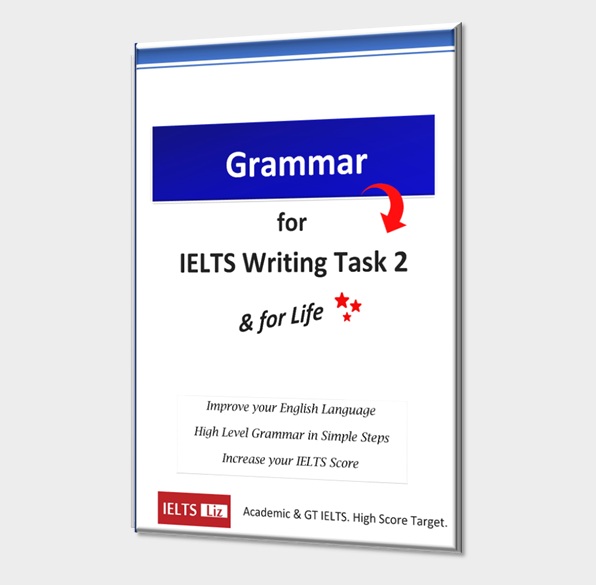
My Grammar E-book is now available in my online store. There is a comprehensive chapter on Articles as well as over 200 pages of other grammar to push your English to a higher level. You will find content and details of the e-book given in my store. See below:

CLICK HERE: VISIT STORE

FREE SUBSCRIBE

Subscribe to get new lessons & tips by email.

.

Quick Grammar Test: Countries and use of “the”

Many people make mistakes using “the” when referring to countries. For example, we say “the Philippines” but we also say “France” without “the”. This can be confusing for many people. In IELTS Writing Task 1 Academic test it is common to have a chart that represented different countries. Use the correct articles (a,the, zero article) is essential.

Grammar Test: Using “the” for Countries

Below is a short test to see if you can use the defined article “the” correctly in relation to countries and nationalities.

Question: Which of the following are wrong?

  1. the British
  2. the UK
  3. the America
  4. the Britain
  5. the English
  6. the US
  7. the Americans
  8. the England

Answers

You can find the answers by clicking below:

CLICK HERE: ANSWERS TO THIS TEST

All the best,

Liz

………………………

FREE SUBSCRIBE

Subscribe to get new lessons & tips by email.

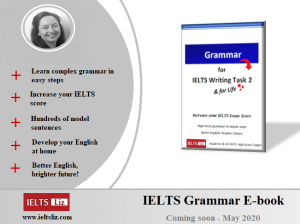
Grammar E-book Now Available

Dear Friends,

Below are some details of my new Grammar E-book.

Aims of the Grammar E-book:

  1. English Language Development – to take your English to a higher level by learning complex grammar in easy steps.
    • This e-book covers complex sentences, sentence structures, noun clauses, noun phrases, articles, prepositions, word order, passive voice, tenses, conditionals, intensifiers – in total about 30 chapters to help you develop range and accuracy.
  2. Writing Task 2 – tips and specific focus pages to help you increase your score through grammar. This includes tips about grammar band scores, paragraphing and even paraphrasing tips.

There are over 300 pages of grammar tips, lessons, explanations and illustrations of complex grammar which also include a Workbook of exercises. This e-book is a great way to improve your English grammar and push your level up by learning complex grammar features. 

Do you want to know what is in this e-book?

Click below for a preview of the chapters and some extra details:

Would you like to get this e-book?

Payment

My online store accepts all major cards from almost all countries around the world and paypal as well.

All the best, 

Liz


FREE SUBSCRIBE

Subscribe to get new lessons & tips by email.

IELTS Speaking Part 3 Health & Coronavirus Answers & Questions

To prepare for the predicted topic of Health & Coronavirus in IELTS Speaking Part 3, you will find below questions, model answers and useful vocabulary with an audio for pronunciation. This is a current world issue and as you know IELTS are guided by world issues for their choice of topics in IELTS Speaking and IELTS Writing.

Questions & Model Answers: IELTS Speaking Health & Coronavirus Part 3

See the questions and model answers below. Remember, the examiner is not testing your knowledge. Each question is an opportunity for you to showcase your English language. The examiner might ask you to explain more, or interrupt you or challenge you. Be prepared in part 3 for a discussion rather than question/answer.

Do you think health is important? Why?

Health is extremely important. Without it we are unable to work, unable to earn a living, unable to socialise and we become completely dependant on others. Health is one of the few things that we can’t buy, but we can take steps to improve and protect our health. By protecting our health, we are protecting our future.

What types of activities do you think help people stay healthy?

There are many kinds of activities that can help us maintain good health. Cardiovascular exercise such as jogging, tennis and football are really beneficial. But many people prefer doing more gentle exercise like yoga or taichi that help us with our physical and mental health. Personally, I think a balanced approach of different types of exercises is best combined with a healthy life style and diet.

What is the difference between physical health and mental health?

Physical health is about our physical bodies: our muscles, our blood circulation, our internal organs and about keeping our immune systems and other bodily systems working well. Mental health, on the other hand, is concerned with how healthy our thoughts are and our perspectives. It affects our ability to cope with situations in life.

What difficulties did some people face with social distancing and lockdown at the time of the Coronavirus outbreak?

I think some people had a lot to cope with during lockdown. Some people struggled with the isolation, some people worried about their income and others struggled with being trapped in a building unable to go out. Most of the problems were psychological, but some also had practical problems. Some people were unable to get to supermarkets due to vulnerability and struggled to get food. It was a really challenging time.

What did some people do to stay positive at that time?

People used different methods to keep their chins up when they were in lockdown. I think some of them went online to either work or socialise. Others turned to indoor exercise and art projects. Nature projects like planting indoor plants and watching live videos of wildlife were also really popular. It was surprising how enterprising and creative people were ideas.

What useful technology helped us combat the Coronavirus?

That’s a really interesting question. Let me see … I guess some of the most important pieces of technology were things like ventilators which kept people breathing when they had severe Coronavirus and the technology behind the contact tracing and testing which was used quite effectively in many countries to suppress the spread of the virus. Looking ahead at new technology coming out, new apps are being designed to allow people to trace where they have been and if they have come into contact with the virus at any time. I think this will really help us control the virus better.

During the Coronavirus crisis, some people did courageous deeds. Can you give an example of one from your country?

There was more than one example of courage in the face of possible illness or death in my country during the Coronavirus pandemic. All doctors, nurses, hospital staff, care home workers, social workers and other frontline workers all selflessly went to work knowing the risks they were facing. Some of them lost their lives as a result. Each day, they showed courage and determination to save lives. They were indeed brave and without them many more people would have died.

What do you think could have been done better to deal with the Coronavirus outbreak?

It’s hard to say. Each country had their own approach based on what was happening in their own country and decisions were led by the science. With hindsight some countries should have done more rigorous contact tracing and testing at the start of the pandemic to prevent the disease spreading so widely. Also some of them ought to have gone into lockdown sooner before the virus had spread so far. We will see how things progress from this point onward.

Note: “It’s hard to say” is an expression which means “This isn’t a simple thing to discuss – it’s complicated.”

Useful Language & Pronunciation

To learn the pronunciation of the following vocabulary, click the audio below this word list.

  • cardiovascular
  • muscles
  • aerobic
  • brisk walking
  • vigorous exercise
  • blood circulation
  • internal organs
  • immune system
  • taichi / yoga
  • mental health
  • psychological well-being
  • perspectives
  • struggle with isolation
  • feeling trapped in a building
  • socialise
  • nature or art projects
  • a creative outlet
  • to be enterprising and creative
  • ventilators
  • rigorous contact tracing and testing
  • pandemic
  • frontline workers
  • to be led by the science
  • hindsight

Audio

.

I hope you found this useful 🙂

All the best and stay safe!

Liz

………………..

Free Subscribe to get New Lessons by Email
IELTS Speaking Part 3: Coronavirus & Health

Below you will find some predicted IELTS Speaking Part 3 questions for the topic of Health & Coronavirus. As you know, IELTS like to use current world issues for their topics and this will no doubt appear at some time in one form or another.

Questions will probably be phrased carefully to avoid you having to talk about deeply emotional or disturbing aspects of the virus. They will also avoid political questions.

IELTS Speaking Part 3: Health & Coronavirus

Predicted questions for this new topic. I do not usually predict topics or questions because I feel it is not required due to the large number of known recycled topics. However, I do think now is the time to predict this topic and help you prepare.

  1. Do you think health is important? Why?
  2. What types of activities do you think help people stay healthy?
  3. What is the difference between physical health and mental health?
  4. What difficulties did some people face with social distancing and lockdown at the time of the Coronavirus outbreak?
  5. What did some people do to stay positive at that time?
  6. What useful technology helped us combat the Coronavirus?
  7. During the Coronavirus crisis, some people did courageous deeds. Can you give an example of one from your country?
  8. What do you think could have been done better to deal with the Coronavirus outbreak?

Model Answers: Health & Coronavirus Topic

Below you will find a link to model answers with list of useful vocabulary and an audio to help you with word pronunciation.

CLICK HERE: MODEL ANSWERS

All the best

Liz

Useful Coronavirus Vocabulary

CLICK HERE: CORONAVIRUS VOCABULARY

…………………..

Free Subscribe to get New Lessons by Email

Grammar Answers to Yesterday’s Lesson

Below are the questions and answers to the lesson I posted yesterday which focused on Articles (a /the) in English grammar.

Did you feel it was a difficult lesson? This might be because you need to learn more rules about using a and the. You also need to learn about using no article.

The other problem is that there are irregular nouns that never use articles when used in a particular way, such as prison, hospital etc. I’ve explained below. However, you should consider getting my New Grammar E-book which lists the rules very clearly. The e-book is written for you to learn on your own at home.

Model Essay: Click here to see a full model essay for this topic: Crime & Punishment Model Essay

Questions & Answers

  • The reason for most first-time offenders committing crimes again, once they have been released from prison / the prison, is due to lack of / the lack of rehabilitation.
    • Answers: prison the lack of
    • Correct Sentence: The reason for most first-time offenders committing crimes again, once they have been released from prison, is due to the lack of rehabilitation.
    • Tips:
    • a) usually a singular countable noun would require an article (a / the). However, there are exceptions to this rule. Words such as “prison, hospital, school etc” are referring to a function. Such nouns never use an article (no “a / the”) when used in this way.
    • Example: He went to hospital.
    • In the above sentence, we are not referring to one particular hospital (a hospital or the hospital), we are referring to hospital as a function.
    • Here is a typical dialogue:
    • i) “My wife went into hospital last night.”
    • ii) “Really? Was she very seriously ill?”
    • i) “No, not very. But we didn’t want to take a chance.”
    • ii) “Which hospital did she go to?”
    • i) “Oh, you know, the hospital on the corner of Dower Street.”
    • In the dialogue above, you can see the first use of hospital is general and not specific. The second use of hospital is specific.
    • As I said, these words “hospital, prison etc” are irregular.
    • My new Grammar E-book gives you lists of irregular words and use of articles like this.
    • b) “lack” in this sentence is a noun. As explained above, nearly all singular countable nouns will require an article. We use “the lack of ” because we are referring to a specific lack. When we refer to something specific we use “the”. This is a common error with this noun.
    • “lack” is also a verb: “The NHS are currently lacking sufficient PPE in the UK.”
  • Repeat offending is also owing to the difficulty that people / the people with a criminal record have of finding employment / the employment.
    • Answers: people / employment
    • Correct Sentence: Repeat offending is also owing to the difficulty that people with a criminal record have of finding employment.
    • Tips:
    • a) we only use “the” (as explained above) when we refer to something or someone specific. In this case, it is not a specific group of people. It is people in general. 
    • When we have a plural noun that is speaking in general, we do not use an article at all. 
    • Example: Cars are the most common form of transport.
    • In the above sentence, the word “cars” is plural and also non-specific (general). We are not talking about a particular group of cars, we are talking about cars in general. When we speak in general with a plural noun, we do not use an article.
    • b) employment is an uncountable noun and in this sentence, we are referring to employment in general (it is not specific). This means it does not require an article at all.
  • Ensuring that people serving prison sentence / a prison sentence learn useful skills will help them find jobs / the jobs when they are released.
    • Answers: a prison sentence     jobs
    • Correct Sentence: Ensuring that people serving a prison sentence learn useful skills will help them find jobs when they are released.
    • Tips:
    • a) In this sentence, although we are referring to people, each person only serves one prison sentence at one time. This means we talking about people serving “a sentence”. It means one sentence that is not specific and this means we use “a”.
    • b) jobs is a plural noun referring to all jobs in general. This means we do not use an article at all. In this sentence, it would also be possible to have “a job”. This means a non-specific job – any job.
  • When offenders are released from prison / the prison and can find employment / the employment, it helps them reintegrate back into society / the society.
    • Answer:  prison     employment    society
    • Correct Sentence: When offenders are released from prison and can find employment, it helps them reintegrate back into society.
    • Tips:
    • a & b) see above.
    • c) the word “society” is another irregular noun. When we write about society in general rather than one specific society, particular society, we never use an article. “Society should take care of the vulnerable.” In this case, we are referring to society as a whole – in general. Or you could also say “A society that does not take care of its vulnerable people is a bad society.” – we are referring to one society which is non-specific.
  • Harsh prison sentences deter people / the people from considering crime / the crime.
    • Answers:    people     crime
    • Correct Sentence: Harsh prison sentences deter people from considering crime.
    • Tips
    • a) explained above.
    • b) the word “crime” is another irregular noun. Normally a singular countable noun would require an article. However, “crime” is irregular and does not require one when we are referring to crime in general rather than a specific crime.

I know this was difficult, but I hope you also found it a useful lesson. If you have problems in this area, now is the time to fixed those problems.

All the best

Liz

…………………………

error: Content is protected !!