Useful Links for IELTS Essays

Hi guys,

I’ve put together a list of some useful pages on my website to help you with your writing task 2 essays. Click below:

Writing Answer Sheet: Learn how to use the official IELTS answer sheet in a useful video lesson and download it for practice at home.

Paragraphing: Tips on how many paragraphs your essay should have. You will be marked on the use of paragraphs. Make sure they are logical. Also remember the body paragraphs should be equal in length for writing task 2.

Finding Ideas for Essays: How to find your own ideas or get them in a convenient e-book. It also provides a useful link for essay planning tips.

When to give your opinion: If you fail to give your opinion when it is asked for, you will get a low score. Learn about different instructions.

Linking Words: Get a useful list of linking words for your essay. They are easy to learn and easy to get right, but so many people lose marks because they don’t pay attention.

Quotes, Idioms & Proverbs: Learn whether it is a good ideas to use them in your essay or not.

100 Essay Questions: Use these questions to practise writing at home. You will soon see the full range of topics that IELTS like to use.

Advanced Essay Lessons: If you need help pushing your score higher or you don’t understand why you are not getting the right score, learn the best techniques in easy steps with my Advanced Lessons for Essays. Visit my Store to get them.

All the best

Liz


Subscribe for free to get new posts by email

IELTS Test Tips & Advice On the day

Below are some tips for the day of your IELTS exam. This tips are to guide you before your IELTS test and also during your test. These tips are for both GT and Academic tests. 

On this page, you will find:

  1. Last Minute Listening Tips
  2. Last Minute Reading Tips
  3. Last Minute Writing Tips
  4. Last Minute Speaking Tips
  5. “On the day” – tips for your test day

It is important that everyone reads this page before the test day and also on the morning of the test day. 

IELTS Test Tips: Last Minute Before Your Test

The following IELTS test tips for each part of the IELTS exam will help you focus on the right things during your test. Don’t lose marks by not being prepared.

1) IELTS Listening Exam Tips

  1.  Make sure your headphones are working. Raise your hand if you have a problem.
  2. If loud speakers are used instead of headphones, make sure you can hear the recording. If you need the volume increasing, raise your hand immediately and someone will come to ask what the problem is. Explain that you need the volume increasing.
  3. Use the time given to prepare the questions. Always read through all questions before the recording starts and note keywords. Thet keywords will help you keep track of the information and listen for answers.
  4. Answers to questions come in order (question 1 and then question 2 etc)
  5. Underline keywords in the questions. You should practice speed reading questions and spotting keywords at home as part of your preparation. For the computer test, you can highlight words on the screen.
  6. Focus on listening for answers rather than trying to understand everything. You win a point for each question you answer correctly.
  7. Write your answers on your question paper while you listen. For the computer test, you put the answers directly into the computer – through clicking, dragging or typing.
  8. Pay attention to how many words and/or a number or numbers you can have for each answer. Many people forget to check this. For example, “15 workmen” is one word and one number, “driving test” is two words.
  9. You will be given 10 mins after the recording has ended to transfer your answers to the answer sheet for the paper based test. For the computer test, you’ll only get 2 minutes to check your answers. Always check your spelling – any spelling errors and the answer will be marked wrong.
  10. It is recommended to use ALL CAPITAL LETTERS FOR YOUR ANSWERS for the paper based test to avoid problems with handwriting. This is not an issue with the computer test.
  11. For 25 essential tips for listening, watch this video: IELTS Listening Essential Tips 

2) IELTS Reading Exam Tips

  1. Read the instructions carefully and make a note of how many words you can use for your answer. Each word is counted, for example “university reception hall” is three words and “workbook” is one word.
  2. Each answer is worth one point so don’t waste too much time finding one particular answer when you could spend the same amount of time finding two easier answers. You decide when to move on to the next question.
  3. Keep your eye on the clock. Make sure you have enough time for the final passage.
  4. You can tackle the passages in any order you want. This is the same for the questions – you can skip questions and come back to them later if you want.
  5. Write your answers directly on to your answer sheet for the paper based test. There is no extra time for transferring later. For the computer test, your answers will be put directly into the computer.
  6. Always spend time analysing the questions before looking for an answer. If you don’t analyse the question enough, you’ll end up jumping from question to passage so many times, getting confused, which wastes valuable time.
  7. Look out for paraphrasing. Find the keywords in the question and pay attention to paraphrases in the passage.
  8. Your aim is to find answers – not to understand the whole passage. Focus on your goal – find as many answers as you can.
  9. It is recommended to use ALL CAPITAL LETTERS FOR YOUR ANSWERS for the paper test to avoid problems with handwriting. This isn’t an issue with the compute test.
  10. Spelling is essential to get right or the answer will be marked wrong.

3) IELTS Writing Exam Tips

Click on red links to access more pages:

  1. Don’t spend more than 20 mins on task 1. Keep checking the time so you don’t make this mistake. You need 40 mins for task 2 as this task carries more marks and requires more words.
  2. Always write over 150 words for task 1 and over 250 words for task 2. See this lesson about the recommended word count.
  3. Don’t count the number of words you have written. You won’t need to total up the words and you won’t need to mention them at the end of your essay. If you are concerned about word count, just quickly count the lines and multiple by the usual words you see on a line with your writing. See this lesson to learn about using the official IELTS writing answer sheet properly. For the computer test, there is the advantage of seeing how many words you have written appear on the screen.
  4. You can plan your essay on the question paper. No extra paper is given for planning. The examiner will not look at your planning, only at your essay. Planning is essential because the examiner will be marking the structure, organisation etc, not just your language. For a quick overview of the writing task 2 marking criteria, click here: Band Scores & Tips for Writing Task 2
  5. Always write a clear overview for task 1 academic. See here about the conclusion/overview issue. The overview must contain all key features collected into one paragraph. It is the most important paragraph of your task 1 report.
  6. For GT writing task 1, cover all bullet points given and follow the order they are presented. Use them as guidelines for your body paragraphs. 
  7. Always write your conclusion for task 2. Never miss it out. If you only have 3 mins left, use it to write your conclusion. See this video: Using the last 5 minutes
  8. Always organise your writing for both tasks into body paragraphs. Paragraphing will be marked. Body paragraphs should be of equal length.
  9. Check your spelling. You can use either American or British spelling but don’t mix them.
  10. Keep all information focused and relevant. More does not mean better. Quality, not quality.
  11. If you run out of paper, put up your hand and you can get more. Do not remove any paper from the exam room.

4) IELTS Speaking Exam Tips

  1. Practice speaking English before your test. Practice expressing your opinions on different topics and talking about your past experiences.
  2. This is an informal interview/chat with an examiner. So be friendly and open. Also explain what you mean in your answers, particularly in part 3.
  3. Be chatty. Show the examiner you are willing to chat.
  4. Listen to the question and answer it directly. Be direct. This applies for part 1 and part 3. For part 2, you will have a chance to prepare your answer.
  5. Add more information (details, examples, description) to all answers.
  6. Keep talking until the examiner stops you. Let the examiner guide you with time.
  7. Don’t ever be silent. There is never a reason for your English to completely stop working.
  8. Don’t focus only on vocabulary. Vocabulary is only 25% of your marks. However, do make sure you use relevant topic based vocabulary. For example, if your topic is Happiness” then you should use words such as “smile, laugh, giggle, contentment, joyful, fulfilment” as well as antonyms (opposites) such as “sad, depressed, feeling low or feeling down”.
  9. Idioms are not the key to a high score. Most candidates overuse idioms that are too common or outdated. The examiner will note if you use idiomatic language but that doesn’t necessarily mean idioms. Instead use phrasal verbs – calm down, bring up, work out, get over etc. Phrasal verbs are the best types of idiomatic language to use in IELTS.
  10. The questions are not aimed to test your knowledge. Each question is just a chance to show your English. So use each question to your advantage.
  11. You can wear anything you want. This is not a job interview. Clothing does not affect your score. Aim to be comfortable. And be relaxed with your body language – this is informal.
  12. Use a range of grammar tenses in your test. Even if the question is in the present tense, you can add extra information comparing with the past to show flexibility with tenses.
  13. American or British English pronunciation can be used. A mixed accent is also fine. The key is to make sure your words are easy to understand.
  14. Ask the examiner to repeat the question if you need it. See this lesson about asking the examiner questions.
  15. If the examiner interrupts you, don’t worry about it. It’s a normal part of the speaking test. Just focus on the next question.
  16. The examiner will provide a pen and paper to prepare your talk for part 2. The examiner will not look at your plans and will only mark your talk. It is fine to look at your notes and at the cue card during your talk, but also try to make eye contact.
  17. May people are worried they won’t understand the cue card. Don’t be. The cue card is always written in simple English and topics are common topics. Review Misunderstanding the Cue Card page if you are concerned.

5) On the Day IELTS Exam Tips:

Be prepared for your IELTS exam by making sure you know exactly what will happen in the day of your test. Some of these tips will depends on whether you are taking your test at home or not. But read them all anyway. 

  1. Sleep & Eat Well
    • The IELTS test is long. It takes 2 hours and 40 mins to do the listening, reading and writing test. There is no break between the tests. Make sure you are well rested and have eaten in order to keep your concentration during your test.
  2. Clothes
    • Wear comfortable clothing. You are not marked on your appearance for any part of the test, including the speaking test. So, wear something that you are comfortable in and that gives you confidence.
    • The test room might be cold if the aircon is on, so take an extra layer of clothing with you. Or if you are worried it might get hot, wear layers that you can take off.
  3. Drink
    • You can take a drink into the exam room as long as it is in a transparent bottle.
  4. Arrive Early.
    • Make sure you know how long it takes to get to your IELTS test center and exactly where your test will be held. Don’t be late or you won’t be allowed to enter the exam room. You will need to check in so make sure you arrive with plenty of time to spare.
  5. Toilet
    • The listening, reading and writing tests take 2 hours and 40 mins. There is no break, so make sure you go to the toilet before you enter the exam room. If you need the toilet during the test, put your hand up and the invigilator will let you go. But you will lose valuable time by doing this and it could affect your score.
  6. No Phones
    • You will not be allowed to take your phone or any other electronic items into the test room.
  7. Pen, Pencil & Eraser
    •  You should take at least two pencils and one pen – just in case one of them stops working. You should also take an eraser as well. You can’t take a dictionary or extra paper into the test room. For your speaking test, you can take nothing into the room except your ID.
  8. ID
    • Check with your test center exactly what ID you need to take with you. Don’t forget it. The ID you take with you should match the details on your registration form.
  9. Listen to Instructions
    • Listen carefully to all instructions given before your test starts.
  10. Clock
    • There will be a clock on the exam room. You cannot take a watch into your test. Make sure you know where the clock is before your test starts so you can keep checking it in your reading and writing test. If you are taking the computer test, you’ll find a clock at the top of the screen.
  11. Disability
    • If you have any form is disability that will affect your test, you must speak to the test center well before your test date.
  12. Focus & Be Calm
    • Make sure you go into your test with a clear aim and an understanding of the techniques you need to use. Be calm and confident at all time.

Don’t 

  • Don’t cheat
    • This is an international test and cheating or copying is not allowed.
  • No dictionary
    • You are not allowed to use any form of learning aid in your test.
  • Don’t take the test paper home
    • You are not allowed to take any part of the question paper home with you.
  • Don’t continue writing after the invigilator tells you to stop. If you continue writing even one word or one sentence, you could have your whole test invalidated. In the computer based test, you won’t have the chance to continue writing as the screen with shut down at the precise time the test finishes.

The exam tips above contain tips from the official IELTS sites as well as my own from two decades of experience. I hope you find them useful.

IELTS.org test tips on the day

BC test tips

IDP Test Tips

Always check with official sources in case of any changes in rules.

IELTS Speaking: Should I correct myself or keep speaking?

IELTS Speaking test – it is good to correct yourself or should you keep talking? It is common that people might make mistakes with vocabulary and grammar during the IELTS speaking test. But what should you do if you make mistakes? Should you ignore your speaking mistakes or correct yourself?

Should you correct your mistakes in IELTS speaking?

The answer is NO. You should not stop to correct an error.

Why? Read below to have a full understanding why. IELTS Speaking success really does depend on understanding more about how the test is marked and how to maximise your score.

Minor Grammar and Vocabulary Errors

You should definitely ignore these errors. You won’t get extra points for correcting your mistake. You will only show the examiner that you struggle with fluency and need to keep stopping to correct your English. This shows a weakness of English. It is best to keep talking and get a strong score on fluency.

If you make a mistake in the past tense, for example, it doesn’t matter because there will be lots of opportunities for you to show the examiner your past tense ability in English. The examiner is looking at your overall English, not a single sentence or word. So, if you make a mistake, ignore it and keep talking to retain a strong fluency score.

Mistakes in Meaning

If you have made a mistake in the meaning of what you have said, then it is fine to correct yourself. This type of mistake is not a language mistake but an accident that you gave the wrong meaning. IELTS allows for this type of correction.

But you should not repeat word for word what you have just said – you need to re-phrase and continue to show flexibility in English. Below are examples:

Example Answer 1: I really think that people should force their children to do homework because it puts too much pressure on them. Sorry, I mean – I really think that people should not force their children to do homework because it puts too much pressure on them”.

This is not a good self-correction regarding your meaning. It would lower your score because it is a full repetition and breaks fluency.

Example Answer 2: I really think that people should force their children to do homework because it puts too much pressure on them. Sorry, I mean – they should not force them because it could cause mental health problems for the child like chronic stress.

This is the right way to correct a mistake based on meaning. You are paraphrasing and useful different language as well as altering the meaning to be precise. Native speakers do this and it’s fine in IELTS. Your fluency is still strong.

Using Words from Your Own Language in IELTS Speaking

It is best to avoid using words that are not English in an English language test. You are being marked on your ability to communicate in English and you should remember that at all times.

However, sometimes words from your own language sometime pop into the answer without you thinking. Particularly when you are referring to something that is unique to your own language such as sari, guzheng or bibimbap. In such cases, it is best to immediately explain the meaning of the word (paraphrase it in English) in a natural way. Below are examples of how you can do that.

Question: Do people ever wear traditional clothes in your country?

Answer: Yes, they do. Many women in India still enjoy wearing a sari, particularly at weddings. A sari is a long piece of fabric, often silk, which is wrapped around the body and then draped over the shoulder. It’s very flattering to wear. 

Question: Did you ever play a musical instrument as a child?

Answer: Yes, I did. When I was young, I had lessons on the guzheng which is a large stringed instrument made of wood. The sound it produces is rather mystical and reminds me of misty mountains. I stopped playing when I left school.

Question: What is your favourite food?

Answer: Without doubt, bibimbap. It’s a rice dish with a variety of vegetables, such as carrot, cabbage, courgette and many more,  served in a hot stone bowl with chilli paste. It’s a really popular food here in South Korea.

As you can see from the example answer above. The paraphrased explanation of the word adds really high band score vocabulary to your answer. Also when you use “x, which is …”, you are also adding a clause and that will help your grammar score. So, never miss the opportunity to immediately explain any word you accidentally say in your own language. Although the rule really ought to be to avoid doing so in the first place.

RECOMMENDED FOR YOU

—————–

FREE SUBSCRIBE

Subscribe to get new lessons & tips by email.

.

Happy New Year: 2020

Hi guys,

Wishing you all a very Happy New Year and hoping that this coming decade will bring you all you desire.

Below you will find useful links to help you prepare for your IELTS test. Click to open and start learning:

IELTS Band Scores Explained: A Must Read Page

Useful Links & Resources

How to Prepare IELTS: Video Tutorial

Liz’s Android App Quiz: Test your knowledge of IELTS with my IELTS app quiz

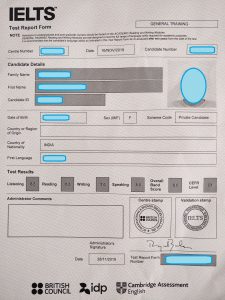
Band Score 8 Tips from a successful IELTS candidate in 2019

Band Score 8.5 Tips from a successful IELTS candidate in 2019

Top Results: To give you motivation and inspiration

Ideas for Essay Topics E-book: Sample Chapter

Coming in 2020

This year I will be releasing my “Grammar for IELTS Writing Task 2” E-book.

This e-book will cover all aspects of grammar that you struggle most with and provide you with lots of sample sentence structures to help you improve your grammar score. There will also be grammar exercises to help you build accuracy.

I’ll post a sample chapter of this e-book soon. I hope to have the e-book ready for purchase in either March or April this year. It is already written but needs formatting and final edits.

Again, my best wishes for this new year and new decade to all of you preparing for IELTS and your family.

All the best

Liz 🙂

Tips from a Band 8 IELTS Candidate

Below are tips from a successful IELTS candidate for getting band 8 overall. For the purpose of anonymity I have called her Annie.

Annie’s Result

  • Listening = 8.5
  • Reading = 8.5
  • Writing = 7.5
  • Speaking = 8

Computer or Paper Test Tips

Choosing the test format (Paper/Computer) wisely: I was weak in listening and no matter what I couldn’t score beyond 7.5 in my practice tests. While I was taking my practice tests on computer, I realised that I had no opportunity to highlight the text or make notes for reference. It was the same case with reading. My writing and typing speed were relatively same. So, I opted for paper based test and it was the best decision as evident from my listening and reading scores. Although I lost quite a lot of time in editing my essay on paper and I feel I could have scored band 8 through typing, listening and reading were my priorities. 

Listening Tips

Like Liz and other tutors reiterate, answers often appear as synonyms. Learning alternative ways in which the same thing is expressed and practicing to identify the synonymous language is extremely helpful. If you’re unable to do so while listening, note down the words used and come back to it while answering. It happened to me twice or thrice and the notes helped me. The key is to stay with the audio and not get lost if you miss something. Recheck the word fit into the answer sentence before you finalize the answer. This eliminates undesired mistakes in tenses, singular and plural, spelling etc. 

Reading Tips

Patience is the key. It’s important to develop stamina to sustain your focus required to complete all sections. Keyword search is the most effective way of targetted reading covering only required parts. When I felt stuck, I chose to answer easy questions first and the quick wins kept me going. Especially in ‘True, False, Not Given’ type, the strategy that aids decision making is crucial. For example, a statement is false if there’s a clear contradiction, a statement should be marked as ‘Not Given’ if relevant information is totally absent. The last two passages are actually informative, sometimes fun to read. If you look at passages with an intention to make sense out of the content instead of just answering, you can connect the dots and derive the answers with much more ease.  

Writing Tips

The biggest mistake I made is to change my stance mid-way. After I wrote the first paragraph, I felt I was able to get adequate points on the other side of motion. I lost time in erasing and re-writing. Even if it means spending good amount of time, identify your stance clearly so you’ll spend rest of the time strengthening your content. We’ll never be able to practice all possible essay questions or preempt our topics, but we can always carry a skeletal structure around which the essay could be developed. Needless to say, an essay with good range of vocabulary is a definite winner. That said, do not force fit words. Throw in a few words to make your essay look smart and that’s just about it.

Speaking Tips

I was quite confident about the speaking test. In fact, I did well in first two parts. Part three was a shocker and I struggled to express my views about the topic. What you need to remember while answering is that you’re not judged based on your choices. You may either like or dislike something and the idea is to express what you feel with clarity in thought. This acknowledgment then made me more comfortable and eased me during the rest of the conversation.

That is all from my end. Annie.

Message to Annie: Thank you so much for sharing your tips. I know many people will benefit from them and be inspired by your results 🙂 Liz.

More IELTS Candidate Tips

Click below to read more tips from successful IELTS candidates:

How I scored Band 9 in Speaking

How I scored Band 9 in Reading

How I scored Band 8.5 Overall

How I scored Band 9 Overall

…………………….

Subscribe for Free for New Posts Delivered by Email

Answers to Autism Hour Listening

Below you can find the transcript and answers to the listening exercise about Autism Hour. If you have not completed this lesson, please do so before looking at the answers below. Click here: Autism Hour Listening Lesson

Transcript & Audio

There are 700,000 autistic people in the UK. Autism is a lifelong disability which affects how a person communicates and responds to people and how they experience the world around them. Although most of the public have heard of autism, few actually understand what it is like to live with it and how to support someone with autism. Autism Hour is when businesses agree to dim their lights and reduce background noise, such as music, to create an environment that is more suitable for autistic people. Autistic people have difficulty processing sensory information leading to sensory overload which can cause great stress and even physical pain. In a world geared towards neuro-typical people, this problem can leave autistic people restricted in where they can go and what they can enjoy. Autism Hour not only opens doors to autistic shoppers and their families, it also provides an opportunity for staff members to learn more about autism which is essential if autistic people are to get the support and respect they need from society. Autism Hour is also important in bringing to light the general affect that sensory information can have on people who are not neuro-typical or who have an illness affecting their ability to cope with light or noise or any other type of sensory information.

.

Answers

  • 1. Autism can affect how someone ……….. with others and how they experience the world.
    • Answer: COMMUNICATES
    • You cannot have “COMMUNICATE” or “COMMUNICATION”. 
    • The sentence must be grammatically correct when it is completed. 
  • 2. Businesses should ………. their lights and reduce noise during Autism Hour.
    • Answer: DIM
  • 3. Too much light and noise and lead to a sensory ………… which can be painful for people with autism.
    • Answer: OVERLOAD
  • 4. Society is mostly …………. towards neuro-typical people.
    • Answer: GEARED
  • 5. Some people with other illnesses can also struggle to cope with ………… information.
    • Answer: SENSORY
      • It is not possible to have the words “LIGHT” or “NOISE” or any other word as the answer. You cannot write “light information” as a compound noun in English.

Tip: Always remember that the listening test is also testing your understanding of English grammar and English vocabulary.


Subscribe to Get New Posts by Email

IELTS Liz App Quiz

Hi guys,

I wanted to let you know that my Android App is ready to be installed.

The app contains useful IELTS quizzes to test your understanding of the test. If you score under 70% in the quizzes, you should really spend more time learning about the test. One of the reasons that people struggle with IELTS is that they don’t fully understand it. So, do the quizzes today and test how ready you are.

The app also contains an easy gateway for you to access my website and my Youtube channel.

The app is called IELTS Liz.

Click here: IELTS Liz App

Iphone users: If this app is popular with Android users, I will consider making another app for you later on. Lets see how things go with this app first.

All the best

Liz

IELTS Listening Using (Brackets) for Answers

In some IELTS books, the listening answers are written using brackets. The common question I am asked is:

Question : Can I use brackets for my answers in IELTS listening or IELTS reading?

Answer: No, you can’t use brackets in your IELTS listening or reading test. Read the information below to understand why.

What are brackets?

Here is an example of some answers using brackets:

  1. charity (work)
  2. detail(s)
  3. (a) reception (room)

Brackets are used to provide optional answers ( more than one answer).

Why are brackets used in IELTS test books?

The brackets are used in the answer keys of books to show different possible answers for one question. It is a quick easy way to show multiple answers. For example:

  • charity (work)
    • charity or charity work (both answers are correct)
  • detail(s)
    • detail or details (both answers are correct)
  • (a) reception (room)
    • reception or a reception or reception room or a reception room (all 4 answers are correct)

Even though the answer key in books show different possible answers, you cannot do that in your test.

You must choose ONE ANSWER ONLY. You can’t give two possible options for your answer. If you think the answer is “detail”, then you must write it like that. You must decide if the answer is plural or singular. If the answer is plural, your answer will be marked wrong. So, take your time deciding if you need to give a plural answer or not. Or if you need to use an article (a/the) or not.

Can you use brackets in your test?

No, not for IELTS listening or IELTS reading. However, if you are taking Academic writing, you can use brackets in your writing task 1 to present data. See the writing section of this website for examples of this.

Want to learn more about IELTS Listening?

If you want to know more about counting words, writing answers and improving your score for IELTS listening, click here: IELTS Listening Free Tips & Lessons

———————–

FREE SUBSCRIBE

Subscribe to get new lessons & tips by email.

.

error: Content is protected !!