A List of 14 Types of IELTS Reading Questions that can appear in your reading test with useful links and tips. In IELTS reading, you will have only one hour to read 3 passages and answer 40 questions. These questions are always divided into different types of questions which you must complete. You must know all the different types of IELTS reading questions so that you can build familiarity and develop techniques.
The types of reading questions are the same for Academic IELTS and GT IELTS.
In order to prepare well for your test, you must make sure that you practice each type of IELTS reading question. Knowing how to tackle each type of question will save you valuable time in your reading test – can time is your worst enemy to conquer.
You’ll find links to some free practice lessons and tips below for each question type. You should also use the IELTS Cambridge test books which contain real past test papers published by IELTS.
IELTS Reading Question Types List & Tips
1. Matching Headings Questions: IELTS Reading
- Task: Choose a heading from the list which matches a section or paragraph in the passage
- Skills:
- understanding the aim of a section
- identifying the difference between a main idea and supporting points
- understanding aims of paragraphs and sections
- understanding general content of paragraphs or sections
- Tips
- read the headings before you read the passage
- there are often more headings than you need
- analyse the headings before trying to match them to sections or paragraphs
- answers are often numerals (i, ii, iii, iv etc) – read instructions carefully to check
- answers do not come in order
- Matching Heading Practice Lesson
- All FREE Reading Practice Lessons
2. True False Not Given / Yes No Not Given Questions: IELTS Reading
- Task: Decide if the information or writer’s opinion in the question statements can be found in the passage
- Skills:
- identifying specific information in the passage
- scanning and understanding information (T/F/NG questions)
- understanding the opinions of the writer (Y/N/NG questions)
- Tips
- Understand the meaning of each answer
- yes / true = the same information is found in the passage
- no / false = the opposite information is found in the passage
- not given = the information is not found in the passage
- paraphrase the statements before trying to locate the answers
- answers come in order
- Understand the meaning of each answer
- True, False Not Given Practice
- Yes, No Not Given Practice
- All FREE Reading Practice Lessons
3. Matching Paragraph Information Questions: IELTS Reading
- Task: Matching the information given in the question with information found in one of the paragraphs in the passage.
- Skills:
- identifying specific information
- scanning for information
- Tips:
- paraphrase the information in the question
- find the information in the passage
- answers do not come in order
- the answer is often a letter (A, D, C, D…) – read instructions carefully to check
- not all paragraphs may be used
- Matching Paragraph Information Practice Lessons
- All FREE Reading Practice Lessons
4. Summary Completion Questions: IELTS Reading
- Task: Completing a summary by filling in the gaps using words from the passage or words given in a box
- Skills:
- scanning for specific information in the passage
- understanding ideas and supporting points
- selecting appropriate words
- Tips:
- identify the type of word needed for each gap (noun/verb/adjective etc)
- locate the information in the passage in order to choose the right word
- if you choose words from the passage, check how many words can be used for each answer
- answers usually come in order
- the summary must be grammatically correct which can help you in choosing the right word for the gap
- Summary Completion Practice Lesson
- All FREE Reading Practice Lessons
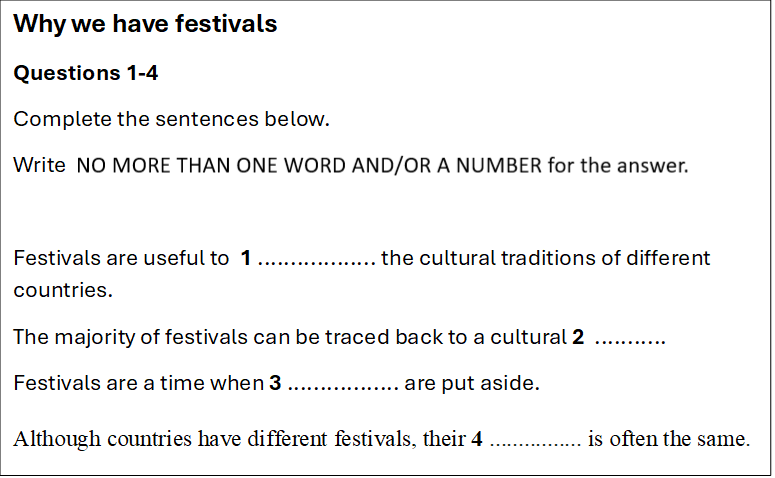
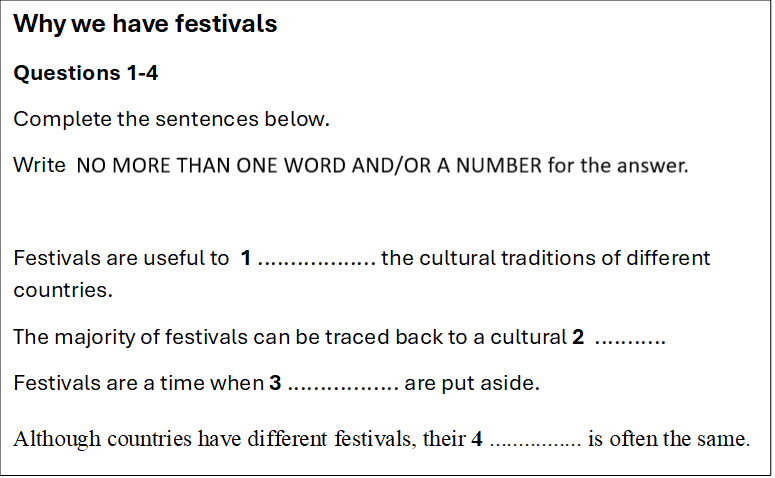
5. Sentence Completion Questions: IELTS Reading
- Task: Completing sentences by filling in the gap with words from the passage
- Skills:
- scanning for specific information
- selecting appropriate words
- understanding information in the passage
- Tips:
- identify the type of word needed for each gap (noun/verb/adjective etc)
- locate the information in the passage in order to choose the right word
- the sentences must be grammatically correct which can help you in choosing the right word for the gap
- check how many words can be used for each answer
- answers usually come in order
- Sentence Completion Practice Lesson
- All FREE Reading Practice Lessons
6. Multiple Choice Questions: IELTS Reading
- Task: Choose the correct answer to a question or the correct ending to a sentence from usually 3 or 4 possible options.
- Skills:
- scanning for specific Information
- understanding information in the passage
- Tips:
- paraphrase the information in the question and options
- locate the precise information in the passage
- answers come in order
- answers are usually letters (A,B,C or D) – read the instructions carefully to check
- Multiple Choice Practice Lesson
- All FREE Reading Practice Lessons
7. List Selection: IELTS Reading
- Task: Choose the correct option from a list of words, information or names. This differs from multiple choice because the questions all relate to only one long list of possible answers.
- Skills:
- scanning for information
- understanding information in the passage
- identifying ideas relating to others
- Tips:
- read through the list and prepare paraphrases
- read through the questions and identify key words
- locate the information in the passage
- answers come in order
- answers are usually letters (A-G) – read the instructions carefully to check
8. Choosing a Title: IELTS Reading
- Task: Choosing the most appropriate title from a list for the whole passage
- Skills:
- identifying aims of a passage
- distinguishing between detail and main aims
- Tips
- look at the differences between the possible titles
- pay attention to the opening paragraphs and closing paragraphs of the passage
- don’t spend too much time on this question – it is only worth one point
- Choosing a Title Practice
- All FREE Reading Practice Lessons
9. Classification / Categorisation Questions in IELTS Reading
- Task: Decide which category the information in a statement belongs to from a list. IELTS call this question: Matching Features.
- Skills:
- locating information in the passage
- categorising information
- Tips:
- find information in the passage
- decide which category the information belongs to
- look out for paraphrases
- Classification Practice Lesson
- All FREE Reading Practice Lessons
10. Matching Sentence Endings: IELTS Reading
- Task: Incomplete sentences with a list of possible endings. You must choose which ending is correct from the given in a list.
- Skills:
- locating information in the passage
- understanding information
- Tips:
- read through the sentences and then read through the possible endings
- prepare paraphrases
- find information in the passage
- choose the best ending to match the information in the passage
- the completed sentence must be grammatically correct
- sentence beginnings follow the order of information the passage
- answers are usually letters (A-G) – read instructions carefully to check
- there are usually more endings given than you need
- Matching Sentence Endings Practice Lesson
- All FREE Reading Practice Lessons
11. Table Completion: IELTS Reading
- Task: Completing the table using the correct word from the passage.
- Skills:
- locating specific information in the passage
- choosing appropriate words
- understanding details
- Tips:
- read the column headings in the table
- identify the type of word needed for each part of the table
- scan the passage for information
- answers are often located in a specific part of the passage
- check how many words you can use for the answer
- Passage Coming Soon
12. Flow Chart Completion Questions: IELTS Reading
- Task: Completing the flow chart using the correct words from the passage.
- Skills:
- locating specific information in the passage
- choosing appropriate words
- understanding details and order of information
- Tips:
- identify the type of word needed for each part of the flow chart
- scan the passage for information
- answers do not always come in order
- use the direction of the arrows and boxes to follow the order of information in the chart
- select the appropriate words from the passage
- check the number of words that can be used for each answer
- Passage Coming Soon
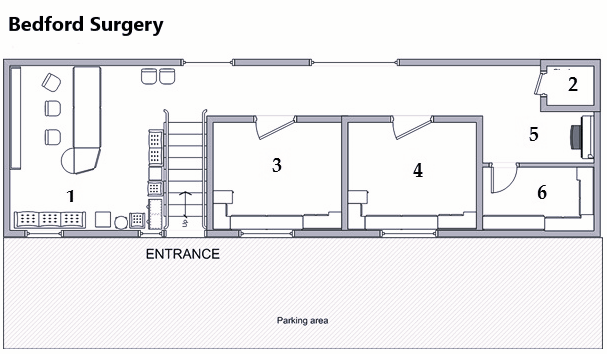
13. Diagram Completion Questions: IELTS Reading
- Task: Labelling a diagram
- Skills:
- locating information in the passage
- relating the information to the diagram
- choosing appropriate words
- Tips
- identify the type of word needed for the answer (noun / verb etc)
- find the information in the passage
- the information is usually located in one specific paragraph or two in the passage
- check how many words you can use for the answer
- answer do not always come in order
14. Short Answer Questions: IELTS Reading
- Task: Answering questions regarding details in the passage.
- Skills:
- locating information in the passage
- understanding detail and specific information
- Tips:
- identify the type of words you need for each answer (noun,verb etc)
- paraphrase vocabulary in the questions
- scan the passage to locate information
- check how many words you can use for the answers
- answers come in order
- Short Answer Questions Practice Lesson
- All FREE Reading Practice Lessons
………………………….
.