50% DISCOUNT – FINAL DAY -Advanced IELTS

BIG DISCOUNTS on Advanced IELTS Lessons & E-books

Ends Today!

Advanced IELTS Essay Writing Lessons – 50% OFF – Target band scores 7, 8 and 9. 

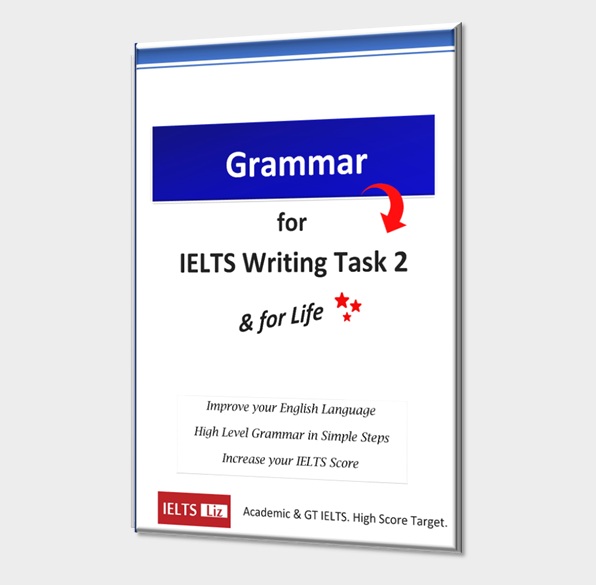
The Grammar E-book – 65% OFF – Complex Grammar in Easy Steps.

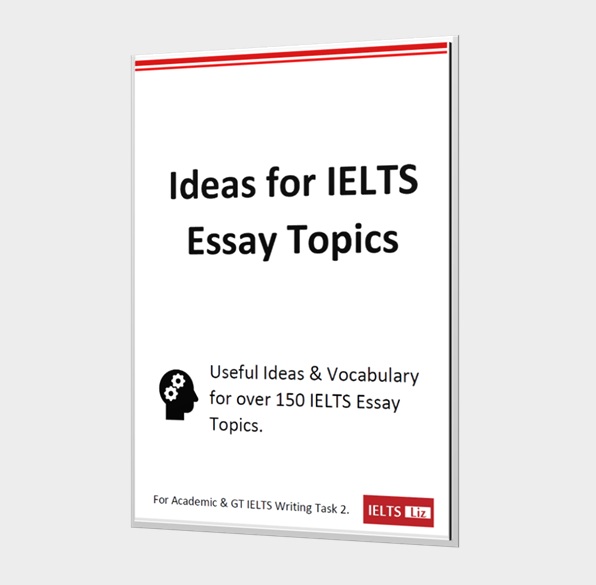
The Ideas for Essay Topics – 60% OFF – Learn ideas and vocabulary for over 150 topics!

Maximise your IELTS band score now.

CLICK TO OPEN:

All details of E-books and Advanced Lessons are provided in my store. E-books can be downloaded to your laptop for your personal use forever. Advanced lessons are streamed online with access for 3 years. These items are designed to provide you with the right techniques and skills to maximise your score

All the best, Liz

50% DISCOUNT: Advanced IELTS Lessons & E-books

BIG DISCOUNTS on Advanced IELTS Lessons & E-books. 

Offer ends on Friday, March 20th 

Advanced IELTS Essay Writing Lessons – 50% OFF – Target band scores 7, 8 and 9. 

The Grammar E-book – 65% OFF – Complex Grammar in Easy Steps. 

The Ideas for Essay Topics – 60% OFF – Learn ideas and vocabulary for over 150 topics!

Maximise your IELTS band score now, click below:

All details of E-books and Advanced Lessons are provided in my store. E-books can be downloaded to your laptop for your personal use forever. Advanced lessons are streamed online with access for 3 years. These items are designed to provide you with the right techniques and skills to maximise your score.

All the best, 

Liz

IELTS Essay Questions for 2022

Below is a list of predicted IELTS Writing Task 2 essay topics for this year, 2022. As usual, these topics are based on common topics, current world issues and trending topics. Both GT and Academic candidates should prepare from the list below.

On this page, you will find:

  • List of types of essay questions
  • Essay Topics for 2022
  • Useful Links for lessons & tips

IELTS Essay Types in 2022

There are five types of essay questions in IELTS Writing Task 2. You will not know which type of essay you will be given. So, you must prepare for all types. When you read the 2022 Essay Topics list below, be ready for that topic to be phrased in different ways for different essay types. Be prepared to be flexible!!

  1. Opinion Essay – agree/disagree/ partial agreement
  2. Discussion Essay – discuss both sides
  3. Advantage / Disadvantage – includes outweigh essay
  4. Cause / Problem / Solution Essays
  5. Direct Question Essays – Positive . Negative Development / one question / two question / three question essays

Click here to learn how to spot which type of essay you have: IELTS Essay Types

IELTS Essay Topics for 2022

I’ve organised the predicted IELTS essay questions below and highlighted the topics I feel are more likely to appear. All topics in IELTS essays are current world issues and known society concerns. Our world today is mainly focused on health, work, technology, internet and other aspects of life.

Art

  1. is art important
  2. what can children learn from art, drama etc
  3. is literature important to teach in schools
  4. should the government fund artists
  5. what people gain from live events
  6. should art be censored
  7. does art transcend the language barrier

Books & Reading

  1. e-books – pros and cons
  2. are libraries a thing of the past
  3. children reading story books in their free time
  4. adults reading children’s stories

Business & Money

  1. family run businesses – pros and cons
  2. should we save or spend
  3. should companies be responsible for their employees’ health
  4. why some people do not save
  5. should money management be taught in schools
  6. is dress code or uniforms important in a company
  7. why do some people get into debt
  8. spending money on unnecessary items / luxury goods
  9. supporting small local businesses
  10. buying local or foreign products
  11. relocating companies to the countryside away from city centers – pros and cons
  12. factors in business success
  13. is the layout of an office important

Character & People

  1. is leadership innate
  2. factors behind success
  3. are people more impatient than before
  4. are older people as respected as they should be
  5. people who follow fashion trends
  6. keeping up with the Joneses
  7. individuality or conformity in schools 
  8. why do some people struggle with change
  9. are people less respectful of the elderly nowadays
  10. are people becoming less formal

Crime & Punishment

  1. fixed punishment for a crime or should circumstances play a role in deciding punishment
  2. prisons – pros and cons
  3. stopping ex-convicts from re-offending
  4. how to reduce crime in society
  5. do some films encourage criminal behaviour
  6. should teenage offenders get the same punishment as adult offenders
  7. why people watch crime shows on TV
  8. online crimes
  9. is safety a personal or government responsibility

Culture

  1. are museums and art galleries important
  2. can children gain from visiting museums and galleries
  3. should the government support artists
  4. should schools prioritise science over the Arts
  5. importance of traditional clothes and music
  6. how tourism is changing local cultures
  7. how can the government / schools preserve traditional culture
  8. globalisation – will cultures be lost
  9. how has the internet affect culture around the world
  10. are public celebrations important for culture
  11. people spending a lot of money on weddings and celebrations
  12. do foreign films change local culture

Education

  1. discipline in schools
  2. pros and cons of learning online
  3. is science and technology important to teach
  4. are university degrees more important than experience
  5. how can people learn soft skills, such as communication, personal skills etc
  6. homework for children – an aid to learning or too much pressure
  7. who influences children most – teachers or parents
  8. teaching good values – teachers or parents
  9. are children from poor backgrounds disadvantaged in education
  10. is history important to learn
  11. studying abroad
  12. children of different abilities should be taught separately
  13. home schooling pros and cons
  14. education in cities compared to rural areas
  15. how to make learning interesting for children
  16. all education should be free

Environment, Nature & Wildlife

  1. protecting trees/ endangered species – causes / problems / solutions
  2. how to educate people about environmental problems
  3. noise pollution / air pollution / water pollution – causes / solutions
  4. how to tackle littering
  5. importance of tackling climate change – causes, problems, solutions
  6. importance of spending time in nature
  7. are wild animals important
  8. testing consumer products on animals
  9. children having pets
  10. who should protect the environment: individuals or governments

Family

  1. what is the generation gap and how can it be tackled
  2. can children benefit from a close relationship with their grandparents
  3. should women with children go to work
  4. are family roles changing within the family
  5. who should support elderly family members: family or government
  6. is it important for family members to spend time together
  7. why do some couples choose not to have children
  8. parents should give children the freedom to make their own mistakes

Food

  1. is our food culture changing
  2. is it important to keep traditional meals
  3. why do people eat junk food if it is unhealthy
  4. should families eat together
  5. is animal welfare important to know about when buying meat in supermarkets
  6. what information would stop you buying a certain product
  7. what is a balanced diet
  8. why are some people vegetarian 

Health

  1. should all health care be free – pros and cons
  2. is public health a personal responsibility or the responsibility of the government
  3. sugar as a cause of health problems
  4. problems with junk food
  5. importance of mental health
  6. tackling obesity in society / in children
  7. health problems connected to using screens
  8. how to encourage children to do more exercise
  9. why people take up meditation, yoga or taichi
  10. walking, cycling to work pros and cons
  11. funding prevention or treatments

Language & Communication

  1. are text messages / emails / video calls a good form of communication
  2. pros and cons of one global language
  3. how has the internet changed the way we communicate and socialise
  4. should children learn a foreign language at an early age
  5. is handwriting a thing of the past
  6. will snail mail one day disappear
  7. difficulties learning a foreign language

Leisure

  1. are holidays important
  2. why is leisure time important
  3. are hobbies important
  4. spending time in nature
  5. children spending time playing together
  6. do people value leisure time more nowadays
  7. why do people watch so much TV in their free time
  8. Is watching TV a good leisure activity
  9. what leisure activities are best for children
  10. should children do homework or have fun in their leisure time

Media & The Internet

  1. social media and our image of beauty
  2. shopping online pros and cons
  3. how the internet has changed the way we work
  4. importance of accuracy in historical films
  5. does the internet make people feel more connected
  6. online streaming for films – pros and cons
  7. problems sharing personal information online
  8. reality TV stars
  9. what makes a film successful – stars, special effects or story
  10. meeting new people online
  11. how advertising influences people – billboards, internet pop ups, brand placement in films, social media
  12. celebrities as role models for children
  13. are newspapers a thing of the past now that news can be found online
  14. unreliable news or information online

Technology

  1. technology makes people lazy
  2. pros and cons of smart phones
  3. technology in the work place results in job losses
  4. technology and solving pollution / environmental problems
  5. technology, science and health
  6. government spending on space exploration or health care social services
  7. how has technology changed our lives / the way we work
  8. how has technology helped mankind

Transport

  1. pros and cons of a traffic free zone in city centers
  2. way to reduce pollution from cars
  3. should driving tests be obligatory every 5 years
  4. how to reduce traffic congestion in city centers
  5. pros and cons of plane travel
  6. how to ensure road safety
  7. should we all use electric cars
  8. people over 80 should not be allowed to drive

Tourism

  1. experiencing foreign countries on TV rather than travelling there
  2. conforming to the culture of the country you are visiting
  3. pros and cons of tourism on the domestic economy
  4. adventure holidays
  5. tourism and environmental factors (including wildlife)
  6. pros and cons of taking holidays on your own country
  7. tourism and its impact on the country

Sport

  1. what children learn from team sports and individual sports
  2. should sports teach competition or cooperation
  3. should schools increase physical education lessons
  4. benefits of exercise, walking, cycling
  5. should sports stars be paid so much
  6. companies sponsor sports events and teams for advertising – pros and cons
  7. sports professionals earning high salaries compared to doctors or nurses
  8. why people do adventure sports
  9. importance of international sports competitions

World Issues & Social Issues

  1. how can homelessness be tackled
  2. should world issues be solved nationally or internationally
  3. closing the gap between rich and poor countries
  4. rich countries should support poor countries at any cost
  5. overpopulation – problems / solutions
  6. people are living longer – pros and cons
  7. should charities help people locally or nationally
  8. are charities important
  9. more people are raising money for charities – why, is this a good thing
  10. living in the countryside or city – pros and cons
  11. food wastage / increase in world food demand
  12. (affordable) housing shortage – solutions
  13. migration of workers from rural to urban areas
  14. taking care of the elderly – family or government responsibility
  15. lack of good education in under-developed countries

Work

  1. pros and cons of working from home
  2. work-life balance
  3. pros and cons of being self-employed / working for a company
  4. bosses contacting people on their days off
  5. importance of holidays from work
  6. both parents working – how it impacts children
  7. is team working skills
  8. job satisfaction or salary
  9. working online pros and cons
  10. work-life balance
  11. pros and cons of technology / machines at work
  • Was this list useful to you?
  • Did you get one of these topics in your test?

USEFUL IELTS WRITING TASK 2 LINKS:

Click below to access some useful lessons and tips for your IELTS essay

How to write an introduction

List of keywords for essay writing

How to use the last 5 mins in your writing test

How long should your essay be

All Free Writing Task 2 Lessons and Tips

Happy New Year to You All in 2025!!

Hi guys,

I just wanted to wish you a very wonderful 2025!

Yet another year is here and yet another chance for us to reach our goals in life. Life is much shorter than we realise and it’s so easy to waste time. Lets use this year to focus on what really matters.

I’m sure we all hope for an end to conflict in the world and for a world where all doors are open to everyone. But even if the world isn’t going in our direction, it doesn’t mean we can’t change our small corner of the world. Each person we help, each person we show kindness to and each person whose differences we respect can bring a vital positive effect into the world.

Take care of yourself this year! Wishing you all the best, always.

See you in 2025!

Liz

HAPPY 2025 !! From Liz

Happy 2022!!

Hi guys,

Many countries around the world are seeing in the New Year tonight. I want to wish you all a very Prosperous New Year. I hope that you reach your goals and find much love this coming year.

It’s been a tough few years. For some of you, it may have also been a painful few years. But each year brings new hope. Each tiny step you take from today onward will help shape your future. Take those steps with enthusiasm, joy and determination to never to give up!

My love to you all. Stay safe this year!!

Liz xx

Answer to Dictation Listen & Write Exercise

Below you will find the full transcript and audio recording for the dictation lesson about “Disaster Management”.

If you haven’t completed this lesson yet, please do so before looking at the answers below. Click here: Listen & Write Lesson

Audio Recording

.

Transcript

Strengthening community capacity to prevent and cope with the impact of disasters is a valuable way to save lives and better protect livelihoods as well as prevent such shocks from crippling development within the poorest countries. Early warning and early action are more cost effective than traditional disaster responses and save more lives per pound spent. In other words, public money has four times as much humanitarian impact if spending on preparation and risk reduction rather than on relief items.

Review

It is important that you check what type of errors you are making having completed this lesson.

  1. Punctuation – did you overuse commas or did you miss them out? Did you notice when sentences ended and a new one began?
  2. Spelling – did you spell all words correctly?
  3. Grammar – below are three common grammar mistakes:
    1. articles (a/the = , the impact, the poorest countries
    2. plural nouns (livelihoods,
    3. verb agreement (is /are save/ saves)

If you need help with grammar, consider getting my Grammar E-book. Click below:

Visit LIZ’S ONLINE STORE

Listen & Write: Dealing with Natural Disasters

This lesson is about listening to an audio recording, taking notes and then reproducing the full written text. This is not an IELTS test practice. It is just a practice exercise to develop sharper listening skills and check your accuracy of written English. Many people preparing for IELTS say they don’t know if their grammar is accurate or not. This is one way to check. When someone speaks aloud what they want you to write down, it is called Dictation. This is a dictation practice.

In this lesson, you will check your ability to:

  1. listen for keywords such as nouns
  2. make notes at the same time as listening 
  3. recreate what you hear in writing – produce a written script of what you hear
  4. check your grammar
  5. check your spelling
  6. check your basic punctuation

How to use this lesson:

  1. get a pen and paper
  2. listen and make notes at the same time
    1.  write down all the nouns you hear. Nouns are always the most important words to write down when you want to reproduce what you hear on paper. 
    2. the aim is not to pause the audio, but to keep it running while you make notes. Of course, the first time, you will only get about 15% of the words. But you can listen again to collect more nouns.
    3. when you write down the nouns, don’t worry about spelling the full word. You can edit all this later after you have finished listening three times.
    4. make sure you keep the order of nouns correct so that you can create the sentences afterwards. You will use those nouns to recreate the full script.
    5. Your aim is not to write all the words while listening. It is to write only key nouns and keywords so you can then recreate the script. This is the same as you do in a university lecture.
  3. listening again and add more nouns to your list
  4. Listen a third time and even a fourth if necessary. You can also write down other useful words as well.
  5. using the nouns you have written down, try to write the whole script on your paper. Don’t listen at this point. Just look at the nouns on your paper and recreate the passage. You will need to add verbs, adjectives, adverbs, articles (a/the) and any other words to make your writing grammatically accurate.
  6. review what you have written and put in full stops, commas and capital letters.
  7. when you think your writing is accurate, listen one more time to see what  words you have missed. 
  8. after those steps, when you are sure your writing is an accurate reproduction, check the answer.
    1. Check which words you are making mistakes with  – are they plurals, articles, verb agreement – which aspects of grammar do you make the most mistakes with
    2. check your spelling and punctuation

This is NOT an IELTS test. It is an opportunity to develop note taking skills at a high level and check the accuracy of your written language. 

Listen and Write: The Best Way to Deal with Natural Disasters

.

Natural Disaster = tsunami, typhoon, earthquake etc

ANSWER

The answers are available by clicking below:

CLICK HERE: ANSWERS TO THIS LESSON

i hope you found this useful.

All the best,

Liz

………………………

Subscribe for Free to get New Lessons by Email

How to write an IELTS Essay

Learn how to write a high band score IELTS essay step by step. You will find 15 key steps for a high score IELTS essay. These steps are for both GT and Academic Writing Task 2. After the steps listed below, you will find useful links that will help you learn more and develop the right skills necessary to be successful in IELTS.

Step by Step: How to tackle your IELTS essay

None of these steps below can be missed if you are aiming for a good score in your IELTS Writing Task 2 essay. Be strategic and focused in how you approach your IELTS essay. Failure to tackle the points below will result in a lower score. They are particularly important for candidates aiming for band 7 and above. For those candidates, you must fulfill the requirements of the higher band scores by following and mastering the steps below.

Step 1: Make sure you identify the type of essay you have been given. This essay is what I call a “Direct Questions” essay. There are two specific questions that you must answer. The first question is about cause. You must state the cause of this trend. The second question requires you to evaluate. This means you must present your opinion as to whether you think this is a good thing or a bad thing. Click here to learn about the Types of IELTS Essays.

Step 2: Before you plan your essay, think about the structure. You have two questions and they are of equal weight. This means you will have two body paragraphs. Both body paragraphs will have equal length. Click here to learn about how many paragraphs in your essay.

Step 3: Identify the issues in the essay question. The essay question above is very simple. It is about computer games. However, some IELTS essay questions are more complex so you must take time to identify the issue or issues. 

Step 4: Brainstorm main ideas. When you brainstorm main ideas. it does not mean you will use all your ideas in your essay. First, brainstorm ideas and after that select the best ideas. To prepare ideas, see this list of common essay topics.

Step 5: Develop supporting points. This is the step that most people miss. Most people plan their main ideas and then start writing. Your main ideas are certainly important, but the supporting points are equally as important. And this is the area where most people easily go off topic. So, using your planning time to prepare your supporting points. Don’t start writing until you are clear about the whole content of your body paragraphs.

Step 6: Think about linking for body paragraphs and supporting points. Linking is another area that is often forgotten during the test. Linking and paragraphing is crucial. They are also both very very easy for you to score high points in. So, never overlook these two points. Plan your paragraphs and make sure you are using a good range of appropriate linking words. Here is a list of keywords.

Step 7: Don’t waste time on your introduction. It is a functional paragraph which usually contains just two sentences. The bulk of the marks are in the body paragraphs.

Step 8: Read the essay question again before you start each body paragraph. This will help you make sure you are using the right language to present your ideas. People think having good ideas is enough. It is NOT enough. You must think about how you will present them. So, read the essay question again and get your bearings.

Step 9: Use a range of grammar features. This is not just about tense. There are a whole range of features that you can use to show your grammatical prowess. 

    1. noun phrases
    2. gerund noun phrases
    3. noun clauses
    4. language of probability
    5. relative clauses
    6. conditional statements
    7. Referencing
    8. quantifiers and intensifiers
    9. comparatives & superlatives
    10. passive voice

To learn more about grammar in Writing Task 2 and to avoid errors, consider my Grammar E-book whcih will help you boost your grammar score and improve your English. Click here to see a Preview of my Grammar E-book. My Grammar E-book is available in my online store: Liz’s Online Store

Step 10: Avoid errors in grammar: articles, pronouns, uncountable nouns, word order, tenses, complex sentences. The more errors you have, the lower your score. Knowing the strength of your grammar will help you avoid errors. Aim for accuracy – do not aim to impress. 

Step 11: Vocabulary only counts for 25% of your marks. Too many candidates focus too heavily on this area. Use vocabulary appropriate for the topic. Don’t over use idiomatic language. Idioms are mostly informal, not formal, so go with phrasal verbs instead which are also idiomatic. Don’t use less common vocabulary if you might use it incorrectly. Errors will lower your score. Aim for accuracy. Spelling counts. There are some useful vocabulary lists on this page: IELTS Vocabulary.

Step 12: Paraphrasing is a language skill that you need to demonstrate. This doesn’t mean changing all words all the time. It means being selective about which words you change and which words you will leave and repeat. It is fine to repeat some words. Over paraphrasing is one reason why many people get a low score in vocabulary.

Step 13: Don’t aim for a long essay or a short essay. If it is too short, it means you haven’t developed your main ideas enough. If it is too long, it gives you room for more errors which will lower your score. Aim for between 270-290 words on the whole. Click here for a video lesson about essay length.

Step 14: Edit your essay. Leave 2 mins to edit your essay. Pay attention to not repeating linking words, checking spelling and spotting vocabulary errors. You might have other areas specific to your language skills that you want to check. Know your weaknesses.

Step 15: Look at the clock. Timing is everything. You must be very strict with timing so that you have enough time to finish your essay. You can start with task 2 if you want, but if you do, make sure you leave 20 mins for task 1. Use no less than 5 mins preparing your essay. Use no less than 2 mins to check your essay at the end. This leaves around 33 mins for you to write your whole essay. Practise this at home under exam conditions until you are able to do this.

Step 16: If you find my free lessons are not enough for you or if you want more in-depth training for essay writing, please get my Advanced Writing Task 2 lessons which are available in my online store. Click here: Liz’s Online Store

Other Useful Links

Hope you find this page useful. From Liz 🙂 

……………………………………………………..

Free Subscribe to get new Posts by Email

error: Content is protected !!