50% DISCOUNT: Advanced IELTS – Ends Tomorrow!

BIG DISCOUNTS on Advanced IELTS Lessons & E-books. 

Offer ends on Friday, Jan 16th, 2026

Advanced IELTS Essay Writing Lessons – 50% OFF – Target band scores 7, 8 and 9. 

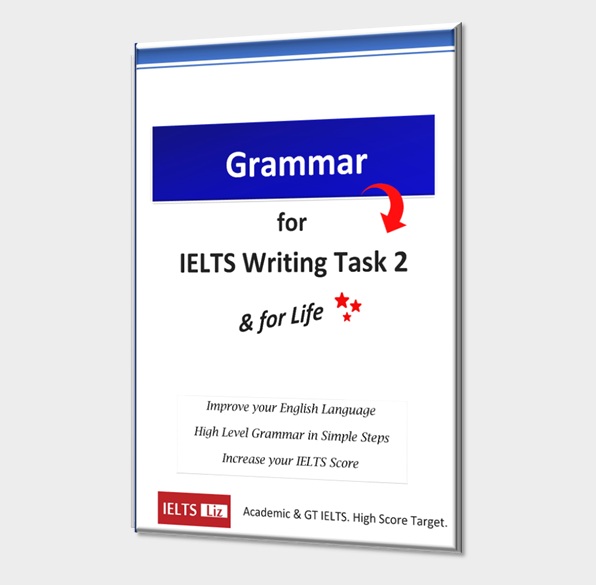
The Grammar E-book – 65% OFF – Complex Grammar in Easy Steps. 

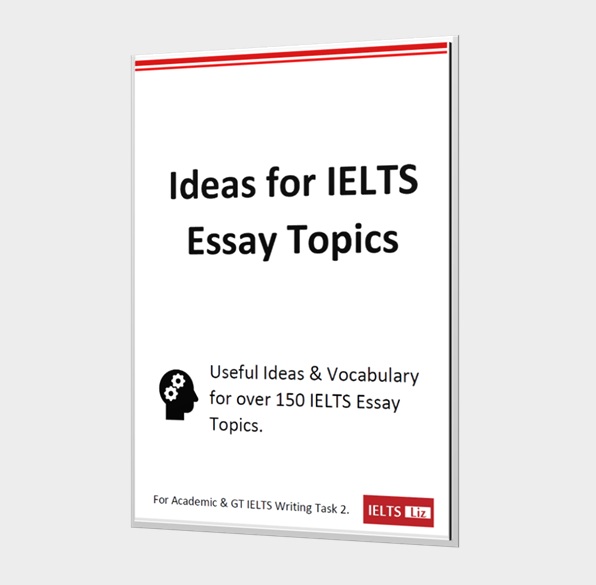
The Ideas for Essay Topics – 60% OFF – Learn ideas and vocabulary for over 150 topics!

Maximise your IELTS band score now.

CLICK TO OPEN:

All details of E-books and Advanced Lessons are provided in my store. E-books can be downloaded to your laptop for your personal use forever. Advanced lessons are streamed online with access for 3 years. These items are designed to provide you with the right techniques and skills to maximise your score

All the best, Liz

IELTS Essays: Five Types of IELTS Essays

There are 5 types of IELTS essays which can appear in IELTS writing task 2. These types of essays are for both GT and Academic writing task 2. Below you will find sample essay questions for each type of essay and links to model answers. 

Please note that IELTS teachers sometimes divide essays into different categories based on how they teach. This means IELTS and teachers give essays different names and categorise them differently.

1) IELTS Opinion Essay

This type of essay is where you are presented with someone else’s opinion and you are asked if you agree or disagree with it. The opinion is often flawed or extreme in its views. Some teachers call this the Argumentative Essay. The instructions can be written in a number of ways. Below are a few examples:

  • Do you agree or disagree?
  • Do you agree?
  • What do you think?
  • To what extent do you agree?
  • To what extent do you agree or disagree?
  • What is your opinion?

No matter how the instructions are written, you can take any position you want: agree, disagree or partial agreement (balanced view). Below is an example essay question:

Some people think that only electric cars should be allowed on the road by 2040. Do you agree?

Note:

  • IELTS will not tell you which type of essay you are given. You must identify the essay type yourself by looking at the instructions and the task given.
  • The biggest mistake for an opinion essay is not giving a clear opinion. Writing “this essay will show that…” does not express your own opinion. Your opinion must be clear and remain the same opinion throughout the entire essay.
  • Another problem is when people sit on the fence without any clear opinion. A balanced view does not mean you agree with both sides fully. You can’t turn an opinion essay into a discussion essay.

2) IELTS Discussion Essay

This type of essay presents you with a statement and you must present the two sides. This might be two sides of the same issue:

Some people think there should be free health care for all people, but others disagree. Discuss both sides.

Or it might be two separate issues which you need to discuss:

Some people think that urban spaces should be used for parks rather than for housing. Discuss both sides and give your opinion.

3) IELTS Advantage Disadvantage Essays

There are two types of questions in this category.

i) Advantage and Disadvantage Essay

This is similar to a discussion essay where you are given a statement must present the positive and negative side of the issue:

Some people think it is good for students to take a gap year before going to university. What are the advantages and disadvantages of doing so?

ii) Outweigh Essay

This is by far the most difficult of the two essay types in this category. It requires you to present an opinion and explain your opinion.

Some people think the world will eventually have only one language. Do you think the advantages of having one global language outweigh the disadvantages?

4) IELTS Solution Essays

There are a number of types of possible questions in this category:

i) Solution Only Essay

Some children have serious weight problems. What are the possible solutions?

ii) Cause Solution Essay

Children in rural areas are being left behind in their academic development. Why is this is the case? What solutions can you suggest?

iii) Problem Solution Essay

More and more people are moving to cities to look for work. What problems does this cause? What are the possible solutions?

iv) Cause Effect Essay

More and more people are moving from the countryside to cities. Why is this? What problems does it cause?

5) Direct Questions Essays

Some teachers call these the Double Question Essays or Two Question Essays. However, these types of essay questions might contain one, two or three questions for you to answer. Below are some examples.

Pollution around the world is becoming a serious problem. Do you think this is a problem that should be solved internationally or on a local level?

In the question above, you are asked one specific question. Your whole essay must tackle this question only.

More and more people are choosing to work from home. Is this a positive or negative development?

This essay question has just one issue and one question. You must explain what type of development you think working from home is.

Some people spend a lot of money on weddings. Why do they do this? Do you think it is good to spend a lot of money on weddings?

Above, you will see you have been presented with two questions to answer: reasons and opinion (evaluating if it is good or not.) 

News editors decide what to print in newspapers and what to broadcast on TV. What factors do you think influence these decisions? Do we become used to bad news? Would it be better if more news was reported?

It is not common to be given three questions. However, it has appeared in the test before so I’ve included it in this list.

******************

Practice Essay Questions for IELTS

You can find over 100 essay questions to practice on this page: 100 IELTS Essay Questions. The questions are divided first into topics and then into essay types. This way you can get lots of practice before your actual test day.

Model Essays & Tips

You can find model essays for each type of IELTS writing task 2 on this page: IELTS Writing Task 2 Model Essays & Tips. You’ll also find tips for essay structure, paragraphing, linking words etc. Everything on this website is free for you to use.

Advanced Writing Task 2 Lessons

I also have advanced lessons for IELTS essays in my store which take you step by step through the techniques of writing a high band score essay. You can find my store here: Liz’s Advanced IELTS Store.

**************

FREE SUBSCRIBE

Subscribe to get new lessons & tips by email.

.

IELTS Speaking: I don’t understand the question. Advice & Tips

In the IELTS Speaking test, can you say “I don’t understand, can you repeat that please?” to the examiner. Will you get a lower score if you say that?

It is not uncommon that you might not understand a question that the examiner asks. Or you might not have heard the question properly so you want the question repeated. What is the best way to tackle this situation?

Can I ask the examiner to repeat the question?

Yes, it’s 100% ok to ask for the question to be repeated. See this page: Asking the Examiner Questions for more information about asking the examiner questions during the test.

Will I get a low score if I say “I don’t understand” in IELTS Speaking?

In IELTS Speaking, you are not marked on your ability to understand a question. You are only marked on:

  • Fluency & Coherence 
  • Grammar
  • Vocabulary
  • Pronunciation

Each of those marking criterion are worth 25% of your speaking marks. As you can see, understanding or being on topic are not marked. This means if you don’t understand a question or you misunderstand a question, you won’t get marked down.  So, feel free to ask for the question to be repeated.

However, do I recommend that you say “I don’t understand“?  No, I don’t recommend you say it. It is never a good idea to show that you struggled to understand something in English during an English language test.

What can I do if I don’t understand a question in IELTS Speaking?

The best way to deal with a question you don’t understand is to simply ask for the examiner to repeat it without saying that you don’t understand. For example:

Could you repeat that, please?

Saying this simple line is clear and direct. It doesn’t show your lack of understanding. It is polite and appropriate for the IELTS Speaking test.

Other similar options are:

  • Sorry, could you say that again, please?
  • Sorry, I missed that. Could you repeat the question, please?

You can also say:

Sorry, I didn’t quite hear you. Could you say that again more clearly?

Sorry, I didn’t quite hear the question. Could you say that again more slowly?

Sorry, what did you say? Could you say that again more loudly?

Alternatively, you could say:

Sorry, I didn’t catch that. Could you repeat that, please?

I didn’t quite catch what you said. Could you repeat that, please?

This is a great way to ask for the question to be repeated because it uses idiomatic language which will boost your score. “to catch something that was said” is idiomatic language.  However, don’t say this repeatedly. Try to be flexible with the language you use when you ask for the question to be repeated. Each word you say while the recording is on will be marked.

Be Prepared

It is important that you rehearse these responses so that when you don’t understand something, you are ready with a variety of possible responses to deal with the situation. This will give you confidence in the test and show the examiner a range of language for dealing with misunderstandings. These are things which will help your score.

Can you ask for the question to be explained?

The answer to this question is Yes and No. Let me explain…

In part 1, the examiner is not allowed to explain the question to you. So, in part 1, you can only ask for the question to be repeated. 

In part 2, the examiner cannot explain the cue card to you. You must do your best to understand the main topic and follow the prompts as best you can.

In part 3, the discussion, it is fine to ask the question to explain what they mean. The examiner will say the question again using different words so that you can understand more easily. You could say “Sorry, could you explain what you mean?” This won’t affect your score, but try not to say too often.

I hope you have found this page useful. I always thinking that the more you are prepared for IELTS and the more you understand about the test, the better your chances of success. For more tips and free lessons relating to IELTS speaking, click here: Free IELTS Speaking Tips

All the best

Liz 🙂

……………………………..

Free Subscribe to get New Posts by Email

Answers to Listening Practice: Superbug

Below are the answers to the practice listening lesson about Superbugs. If you haven’t completed that lesson yet, please do so before looking at the answers. To do the lesson, click here: Superbug Listening Practice Lesson

Transcript

By listening to the transcript you can check your answers and also improve your pronunciation. The recording is given below.

Transcript: When we think of animal species that are exceptionally strong, we usually think of large animals such as the elephant or rhino. These are formidable mammals that from their size are clearly so much stronger that we are. However, when it comes to strength in relation to size, we need to look at insects and in particular ants and beetles.

The leafcutter ant can carry over 20 times its own body weight in its jaws, which are known as mandibles. When they come across a leaf that is too heavy for them to carry, they cut the leaf into more manageable fragments. If we compare this to human strength it is similar to a human being lifting a truck with their teeth.

Ants are interesting for many reasons. They had already emerged about 90 million years ago at the time of the dinosaurs. Much later on, their numbers seem to grow as they developed into organised societies or as we know them, colonies. They now represent about 15% of this planet’s biomass.

However, the dung beetle is even more remarkable for its strength in relation to body weight. The dung beetle can pull weights which are in excess of 1,000 times their own body weight. If we translate this into human strength. It is like one person pulling six double-decker buses.

Unlike many insect or animal species, the dung beetle inhabits a range of habitats and can be found in most places on the planet. Their communication techniques mainly seem to focus on acoustic vibration. They are also great recyclers and play an important part in processing waste. For example, it is said that in parts of Texas, dung beetles are responsible for burying 80% of cattle excrement.

.

Answers

  1. ELEPHANT  RHINO
  2. 20 TIMES
  3. DINOSAURS
  4. COLONIES
  5. 15%
  6. 6 DOUBLE-DECKER BUSES
  7. (ACOUSTIC) VIBRATION
  8. 80%
  9. FORMIDABLE
  10. FRAGMENTS
  11. TRUCK
  12. ACOUSTIC
  13. EXCREMENT

………………….

Free Subscribe to get New Lessons in your Inbox

Listening Practice: Superbugs

This practice listening lesson is based on Short Answer Questions which appear in the IELTS Listening Test. I’ve also included some vocabulary questions to test your word knowledge. Vocabulary questions do not appear in the Listening Test but I thought they might be useful for you.

Short Answer Question Tips

  1. be aware of the type of answer you are listening for: number, date, name, place, noun etc.
  2. underline any word in the question that might help you recognise the information when it is given.
  3. be aware of possible paraphrases when you read the question
  4. pay attention to the word count for the answer
  5. get the answer from the recording – you need the precise word or words
  6. the answers come in order

IELTS Listening Practice: Short Answer Questions

Superbugs Listening 

Questions 1-8: Answers should be no more than two words and/or a number. 

  1. Which mammals are often considered to be the strongest? 
  2. How much weight in comparison to their body’s weight can a leaf-cutter ant pull? 
  3. What animal was present on Earth when ants emerged? 
  4. What are ant societies called?
  5. How much of the Earth’s biomass do ants make up? 
  6. A dung beetle can pull the equivalent to what as a human being? 
  7. What type of sound do dung beetles mostly use as communication? 
  8. How much cattle dung are dung beetles thought to bury in some areas of Texas? 

Recording:

.

Vocabulary Focus Questions

Questions 9-13

Now listen again to the recording and find synonyms for the words below. One word answers only. Answers come in order. Remember, these types of questions don’t appear in the IELTS test – they are extra questions to help you improve your vocab.

  • 9. impressive
  • 10. pieces
  • 11. lorry
  • 12. audial 
  • 13. waste

TRANSCRIPT & ANSWERS

Use the transcript first to check your answers so you can analyse the language and spot keywords. You can also use my transcripts to improve your pronunciation by listening and repeating. After that, check the answer key.

Click below:

Transcript

Transcript: When we think of animal species that are exceptionally strong, we usually think of large animals such as the elephant or rhino. These are formidable mammals that from their size are clearly so much stronger that we are. However, when it comes to strength in relation to size, we need to look at insects and in particular ants and beetles.

The leafcutter ant can carry over 20 times its own body weight in its jaws, which are known as mandibles. When they come across a leaf that is too heavy for them to carry, they cut the leaf into more manageable fragments. If we compare this to human strength it is similar to a human being lifting a truck with their teeth.

Ants are interesting for many reasons. They had already emerged about 90 million years ago at the time of the dinosaurs. Much later on, their numbers seem to grow as they developed into organised societies or as we know them, colonies. They now represent about 15% of this planet’s biomass.

However, the dung beetle is even more remarkable for its strength in relation to body weight. The dung beetle can pull weights which are in excess of 1,000 times their own body weight. If we translate this into human strength. It is like one person pulling six double-decker buses.

Unlike many insect or animal species, the dung beetle inhabits a range of habitats and can be found in most places on the planet. Their communication techniques mainly seem to focus on acoustic vibration. They are also great recyclers and play an important part in processing waste. For example, it is said that in parts of Texas, dung beetles are responsible for burying 80% of cattle excrement.

 Answers
  1. ELEPHANT  RHINO
  2. 20 TIMES
  3. DINOSAURS
  4. COLONIES
  5. 15%
  6. 6 DOUBLE-DECKER BUSES
  7. (ACOUSTIC) VIBRATION
  8. 80%
  9. FORMIDABLE
  10. FRAGMENTS
  11. TRUCK
  12. ACOUSTIC
  13. EXCREMENT

.

RECOMMENDED FOR YOU

ALL LISTENING PRACTICE & TIPS

FREE SUBSCRIBE

Subscribe to get new lessons & tips by email.

.

IELTS Essay Topics for 2021

Below is a list of predicted IELTS essay topics for Writing Task 2 based on topics that have appeared recently, current world events and common topics that frequently appear in IELTS essays. Both GT and Academic IELTS candidates should prepare all topics from this list.

On this page, you will find:

  1. Tips for Preparing Essays
  2. Essay Topics 2021 List
  3. Message from Liz

IELTS Essay Topics – Preparing Ideas

  • Be aware of the range of possible topics and prepare them all. Be aware of current world issues – IELTS likes to stay up-to-date.
  • Prepare strong main ideas for all topics. Main ideas should be ones you can easily explain and develop. 
  • Prepare supporting points. These make up the supporting sentences in your body paragraphs. The examiner will mark these carefully.
  • Practice planning paragraphing and links. See these pages:  paragraphing and Linking Words for Essays
  • Getting ideas for topics
    • Source ideas in model essays online by google topics. You can find some model essays and free tips on this site. Click here: Free Model Essays etc
    • IDEAS E-BOOK. I wrote an e-book covering 150 essay topics with ideas and vocabulary. Get that if you need the help. Visit my store: Liz’s Ideas E-book
  • Target 7 and above. If you need more help reaching your goal for IELTS writing, I have Advanced Writing Task 2 Lessons in my online store: Liz’s Store.

IELTS Essay Topics for 2021

Below is a list of predicted IELTS writing task 2 topics for 2021. The predictions are based on recurring essay topics, recent topics and world events which are all important in IELTS essay questions. The topics are not written as full IELTS essay questions, they are written as topics without the instructions. GT and Academic candidates should prepare all topics – even if you don’t get them in Writing Task 2, you might get them in Speaking Part 3. I’ve highlighted interesting essay topics for 2021 that are based on recent world issues that you might struggle with if you don’t prepare for them. Also note, topics change with each test, on one test day there can be a number of essay questions used, and essay topics are often recycled.

  1. Art and the Arts
    • importance of the arts for society
    • supporting the arts – government funding 
    • theatre and live events
    • freedom of speech and freedom of expression
    • children learning art 
    • museums and galleries – importance
  2. Business and Consumerism
    • local business vs international businesses
    • supporting local businesses – buying local produce
    • business skills – important skills / learning skills
    • family run businesses
    • buying goods or saving money
    • the power of advertising in business
    • shopping online
    • businesses supporting local communities
  3. Communication
    • how online communication has changed our lives
    • are people becoming more isolated because of only meeting online
    • face to face or online communication
    • pros and cons of meeting people online
    • has the internet brought people closer or not
  4. Crime & Punishment
    • how to stop criminals re-offending
    • fixed punishment for one crime or not
    • children – should parents be punished for their children’s crime
    • prison or rehabilitation
  5. Culture
    • foreign cultures – learning through language, learning by travel, adapting to another culture
    • music – importance of music, international music
    • fashion – following trends and spending money
    • films – should historical films be accurate, learning about culture from films, foreign films, subtitles
    • how online media has changed local cultures
  6. Environment
    • global warming
    • solving pollution – internationally or domestically
    • major problems and solutions
    • importance of nature for our well being
    • responsibility for problems – government or individual
    • urban nature 
    • protecting wild species / endangered species – funding, reasons,
    • why people don’t change their life styles to help environmental problems
    • air / noise pollution in cities
  7.  Education
    • putting children into groups based on age or ability
    • importance of children reading books (types of books)
    • science or art / sciences or music
    • how children learn 
    • schools providing meals for children
    • making lessons more interesting
    • importance of science / history / technology in schools
    • disadvantages for children from poorer backgrounds
    • how to improve education in rural areas
    • what age to learn a foreign language
    • exams or on-going assessment / project work
    • university education – costs, funding, courses
    • home schooling / studying from home
    • online education
    • extra curricular activities
  8.  Family
    • single parent families
    • importance of family for old people
    • roles of grandparents
    • supporting vulnerable members of the family: elderly, sick
    • peer pressure for children
    • children growing up in city or countryside
    • children with both parents working
  9. Food
    • childhood obesity – reasons, solutions
    • healthy diet
    • vegetarianism
    • junk food – problems, solutions
    • snacking
  10.  Health
    • funding – prevention or cure 
    • taking care of sick people – government or family
    • funding – health care or other society problems
    • good health – exercise or diet
    • free health care for everyone
    • cosmetic surgery – reasons, value
    • mental health – stress, positive mindset, meditation
  11.  Housing
    • lack of housing – building in cities or rural areas
    • using space in cities for housing or parks
    • funding affordable housing or other problems in society
    • living in flats – pros and cons
  12. Leisure & Free Time
    • importance of hobbies / free time
    • leisure time – importance, activities,
    • spending time with family and friends
  13. People
    • leadership – innate or learned
    • talent – innate or learned
    • ambition – pros and cons
    • important character traits
    • famous world leaders – skills and traits
  14.  Society
    • family, society or government – taking care of the elderly
    • the generation gap
    • city living – positive or negative
    • people moving to cities – reasons, problems, solution
    • spending money on weddings – pros and cons
    • respecting older people
    • traditions – food, clothing, festivals
    • protecting old buildings
    • isolation among people in society
    • supporting vulnerable people in society – government or community
    • roles models in society for children
    • ideal society
    • online media stars
    • reality TV stars
    • importance of charities and charity work
    • importance of green spaces and urban environment
  15. Space
    • exploration – funding, importance
    • communicating with other planets
    • space travel for common people
  16. Sport
    • international sporting event – importance
    • business sponsoring sporting events – pros and cons
    • exercising and health
    • children and sport – importance, who is responsible
    • indoor sports
  17. Technology
    • smart phones – pros and cons, functions, limitations
    • the internet – pros and cons
    • online security (also for children)
    • the future of the internet
    • e-books – pros and cons, libraries
    • children spending too much time online
  18. Tourism & Travel
    • plane travel vs train travel
    • cars in city centres – pros and cons
    • using bicycles rather than cars
    • walking – pros and cons
    • pros and cons of tourism for rural communities
    • tourism and economy
  19. Work
    • working mothers
    • doing volunteer work / charity work
    • work / life balance
    • working long hours – pros and cons
    • experience or education or skills
    • four day working week
    • importance of promotion, salary, job satisfaction
    • working online – pros and cons
    • earning large salaries – films stars, sports people doctors etc
  20. World Issues
    • richer countries should help poorer countries 
    • types of international aid
    • increasing number of old people
    • gap between rich and poor countries
    • violence on TV
    • tackling world issues domestically or internationally
    • news online – reliability of news, sources of news, fake news
    • globalisation
      • work
      • people becoming similar 
      • loss of culture (protecting traditions)
      • loss of local language (protecting language)
      • one language

Sharing your IELTS Writing Task 2 Experience

  • Did you get an essay topic you hadn’t prepared for?
  • What preparation tips do you have for others?
  • How did you manage your time in your writing test?
  • What score did you get in your writing test?
  • Sharing is caring 🙂 

Message from Liz

2021 is our chance to start fresh, to move forward and to build a strong future. Forget your difficult experiences and be proactive about your future. Each positive step forward takes you towards your goal and towards success. 

Be focused and strategic in your preparation for IELTS. You can find lots and lots of free lessons, tips, topics, model answers on this website – go to the HOME page to access it all.

I wish you all lots of luck !!

All the best, Liz 🙂

…………………………………

Free Subscribe to get New Posts by email

Linking Words Practice 2020

Linking words are an essential part of your IELTS Writing Task 2 essay and fall under the marking criterion of Coherence & Cohesion, which counts for 25% of your task 2 marks. This lesson will allow you to test yourself with the correct use of linking words.

The topic is about “Celebrities”. This topic has appeared a number of times in the IELTS Writing Task 2 this year and is guaranteed to appear in 2021 as well. It also frequently appears in the speaking test as well.

Instructions

Read the instructions below very carefully.

  1. Each question contains two sentences.
  2. Read carefully to understand the connection between the two sentences in terms of ideas and content.
  3. Choose the most appropriate linking word to join the two sentences.
  4. Each linking word can be used only once.
  5. Make necessary changes to the sentences to ensure the grammar is correct. It might not be enough to simply add the linking word. You might need to adapt the grammar.
  6. Pay attention to punctuation as well as grammar when you make changes to the sentences. 

Linking Words Practice

Questions 1-7

and     /     but     /     for     /     nor     /     or     /     so     /     yet

Choose one of the above linking words to join the sentences below.

1. Many famous athletes and pop stars donate generously to charities. Many others are just intent on increasing their own wealth.

2. Celebrities have moral shortcomings like everyone else. Many young people often idolise them.

3. Celebrities have tremendous influence over teenagers. They should behave responsibly.

4. Teenagers often idealise celebrities. We all need someone to look up to when we are young.

5. Some film and sports stars only aspire to fame. They dream of becoming famous fast.

6. Young people need positive role models. They will not be able to live with hope and honesty.

7. Celebrities should not be regarded as spiritual mentors. They should not be regarded as life coaches either.

Answers

The answers are now available for this lesson. Click below:

Click here: Answers to this Lesson

All the best

Liz

Answers to Reading Lesson – News we can trust

The answers to the reading lesson about “News we can trust”. If you haven’t completed this lesson yet, please do so before you look at the answers. To complete the lesson, click here: Reading Lesson

Below are the questions, answers and vocabulary focus for the lesson.

Questions 1 – 7: Complete the sentences using no more than three words from the passage above.

1. Trustworthy news is more important than ever because the world is going through a period of _ _ _ _ _ _ _ _ _ _ and unpredictability.

2. _ _ _ _ _ _ _ _ _ _ are the main source of news for most web users.

3. People often tend to choose the version that most agrees with _ _ _ _ _ _ _ _ _ _ when they are offered differing accounts of an event.

4. Sharing unverified news stories with social media friends contributes to
the _ _ _ _ _ _ _ _ _ _ of false information.

5. Objective investigative journalism can _ _ _ _ _ _ _ _ _ _ the spread of fake news.

6. Investigative reporters try to bring to light the relationship between
apparently _ _ _ _ _ _ _ _ _ _ events.

7. Through their work, investigative reporters try to make it easier for us
to _ _ _ _ _ _ _ _ _ _ the world in which we live.

Answers:

  1. UPHEAVALS
    1. the answer does not require the word “global” because this is already indicated in the sentence by the word “world”. Therefore the answer is just one word.
  2. SOCIAL MEDIA PLATFORMS (SOCIAL MEDIA)
    1. Both answers are possible.
    2. Note that brackets indicate other words or answers that are possible. Books often show answers in this way. However, you cannot use brackets for your listening answers. You must choose your answer and be specific.
    3. Note, one answer option has an “s” and the other does not.
  3. THEIR OWN VIEWS (THEIR VIEWS)
    1. Both answers are possible.
    2. The word “views” must be plural.
    3. You cannot paraphrase the answer. “Their thoughts” is wrong.
  4. DISSEMINATION
    1. The spelling must be correct.
  5. COUNTERACT
  6. UNCONNECTED
  7. MAKE SENSE OF
    1. You must have the preposition “of”- “to make sense of something”
    2. The meaning is “understand”.
    3. “analyse and present” is not a possible answer. The sentence cannot be “for us to analyse and present”. The words in the passage (analyse and present) refer to what investigative journalists do, not what we do.

Vocabulary Focus

The following adjectives are positive in meaning and are used to talk about news or news sources that you can trust:

  • trustworthy  /  reliable  /  dependable  /  verified  /  credible  /  real

The following adjectives are negative in meaning. They are used to talk about news or news sources that you cannot trust:

  • untrustworthy  /  unreliable  /  undependable  /  unverified  /  dubious  /  fake

These words can be used in both your speaking and writing tests. They are all topic relevant words when talking about news and media.

I hope you found this lesson useful.

All the best

Liz


Subscribe to get more Lessons by Email

error: Content is protected !!